Why Most Novel Study ideas Fall Flat (And How to Fix It)

If you’ve been searching for better novel study ideas, you’ve likely run into the same frustration: most approaches look good on paper but fall flat in the middle school classroom.
Students complete the work. They answer the questions. They stay busy.
But they aren’t thinking deeply.
This is the gap most novel study ideas fail to address. To close it, we have to move away from “compliance-based” teaching and toward active thinking.

The Real Problem: The “Autopilot” Novel Study
Many traditional novel study ideas are built around one goal: getting through the book. We’ve all seen (or used) the cycle:
- Read a chapter.
- Answer comprehension questions.
- Move on.
While this creates structure, it rarely creates depth. It leaves students recalling information and completing tasks independently, but it misses the productive struggle that leads to true insight.
The Litmus Test: If a student can complete your entire novel study without ever needing to justify an opinion or hear a peer’s perspective, the issue isn’t the student—it’s the design.
Why Traditional Novel Study Activities Often Miss the Mark
- They Prioritize Recall Over Reasoning Comprehension questions like “Who did this?” or “Where did they go?” check basic understanding, but they don’t build reasoning. If students can find the answer by “skimming for keywords,” they aren’t actually reading—they’re hunting.
- They Fragment the Story When every chapter comes with a mandatory worksheet, the novel becomes a series of isolated tasks. Students lose sight of the “Editorial View”—the overarching motifs and character growth that happen across the whole text.
- They Mistake Busy-ness for Engagement A “fun” creative project can increase participation, but it doesn’t guarantee rigor. Busy students are not necessarily thinking students. Effective novel study ideas go beyond “engagement” and focus on intellectual challenge.
Core Principles of High-Level Novel Study Ideas
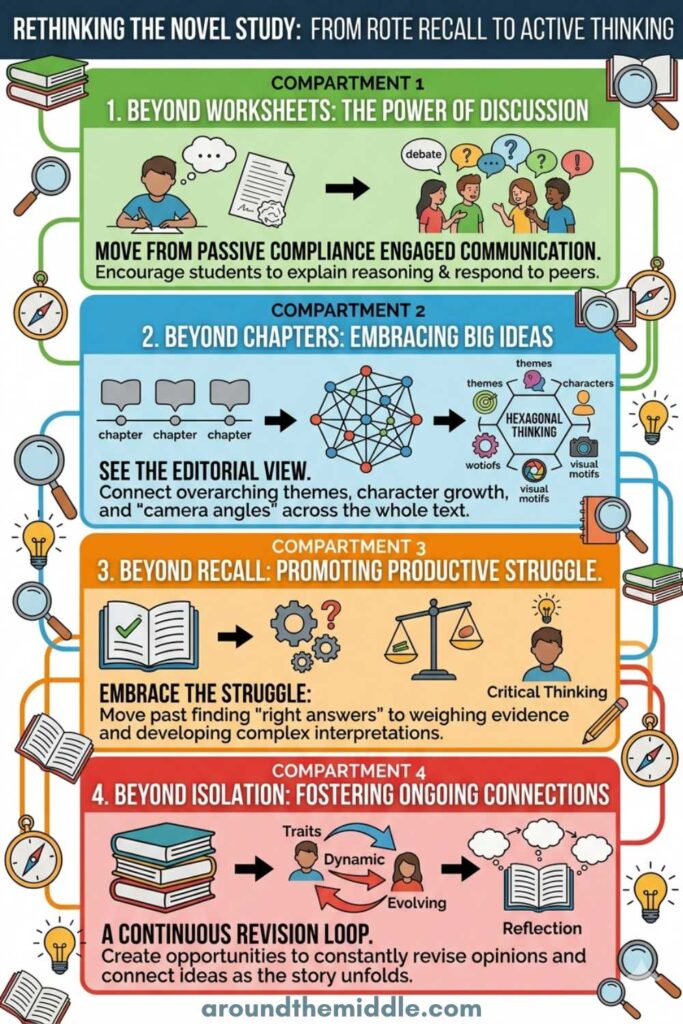
If you want to improve your approach, the shift is simple: Move from checking for understanding to building for thinking. Here are the four pillars of the “Active Thinking methodology:
| From: Passive Compliance | To: Active Thinking |
| Comprehension Worksheets | Dynamic Discussion: Students explaining and refining ideas. |
| Chapter-by-Chapter Tasks | Big Picture Connections: Using tools like Hexagonal Thinking. |
| Finding “Right” Answers | Productive Struggle: Weighing evidence and interpretation. |
| Desk-Bound Silence | Movement-Based Reflection: Physically taking a stand. |
1. Discussion Over Worksheets
Thinking is a social act. When students spend more time responding to others than they do writing in a packet, the level of rigor skyrockets.
- The Shift: Instead of a worksheet, try a Socratic Seminar or a Debate-based task. If you haven’t tried out Socratic Seminars in your class yet, grab my FREE Socratic Seminar bootcamp here.
2. Visual Literacy & “The Editorial View”
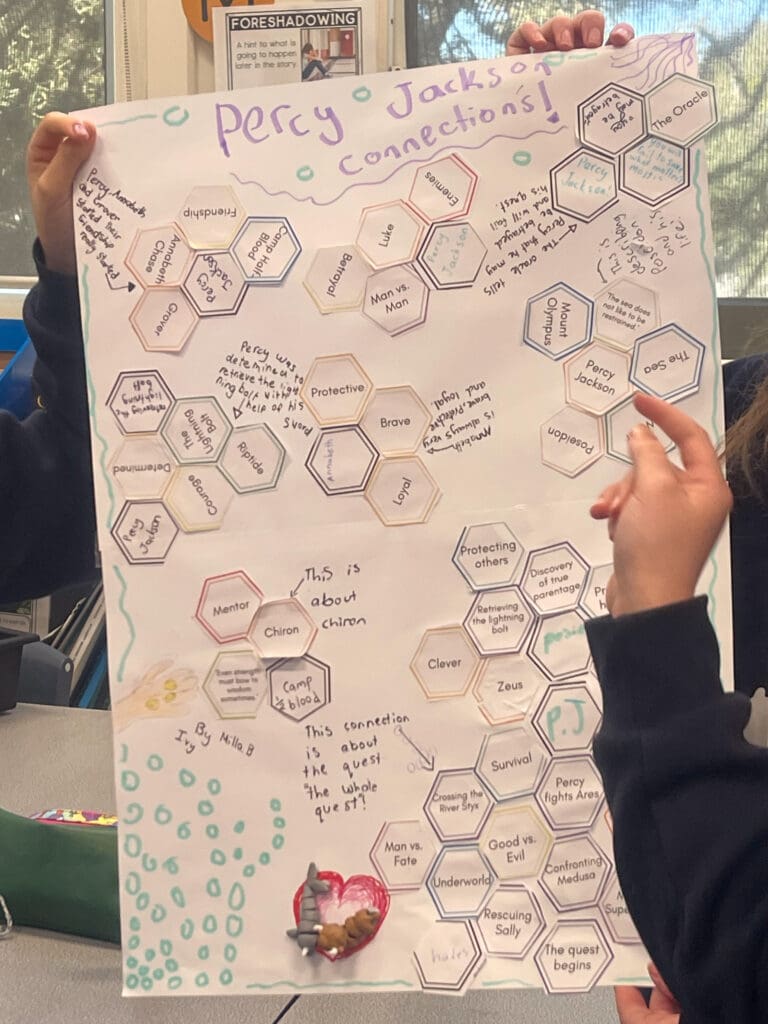
Since I like to focus on visual literacy, I encourage teachers to look at novels through a “camera lens.”
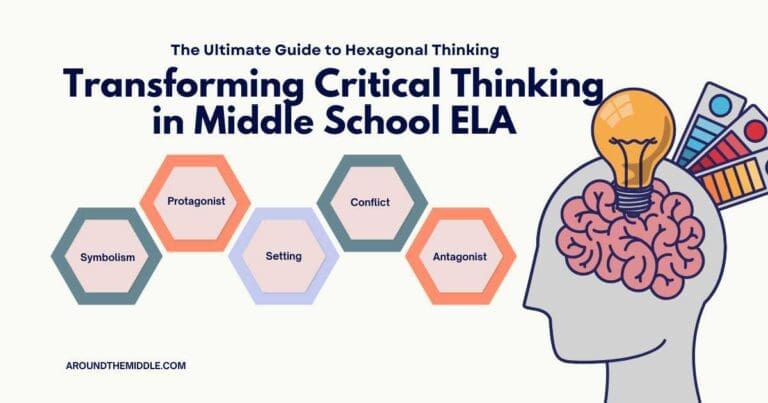
- The Shift: Use Hexagonal Thinking or Visual Motifs to help students see how the author focuses their attention. This moves them from “What happened?” to “Why does it matter?” Want to know how to create your own? Check out my blog post here.
3. Ongoing Reflection (The Revision Loop)
A student’s opinion in Chapter 2 should be different by Chapter 10.
- The Shift: Use Dynamic Character Maps that track motivation shifts, rather than static trait lists.
A Practical Shift in Novel study ideas You Can Use Tomorrow
You don’t need to overhaul your entire unit to improve your novel study ideas. Start with a “Think-Move-Talk” sequence.
Instead of asking: “What happened in this chapter?”
Try this “Active Thinking” prompt:
“The protagonist made a choice in this chapter that they can never take back. Stand on the left side of the room if you think it was a mistake, and the right side if you think it was necessary. Be ready to justify your spot with one piece of evidence.”
This five-minute adjustment gets students out of their seats, requires reasoning, and forces evidence-based conversation.
What Comes Next
Rethinking your novel study ideas is just the beginning. Over the next few weeks, we are going to dive deep into exactly how to structure a unit that builds real thinking without relying on the “death-by-worksheet” model.
Continue the Series:
- Post 2: Moving Beyond Chapter Questions: What to Do Instead
- Post 3: Teaching Theme Through Discussion (Not Worksheets)
- Post 4: Using Debate to Deepen Novel Understanding
Ready to Make This Easier?
If you want ready-to-use resources built around movement, debate, and critical thinking, you can find my movement-based escape rooms and novel studies at In Around the Middle on TPT.
Happy teaching!