Teaching Graphic Novels: How to Teach Students to Read Them with Rigor
If you are serious about teaching graphic novels, you cannot assume students already know how to read them.
They know how to follow dialogue.
They know how to track plot.
But graphic novels demand far more than that.
They require students to interpret visual symbolism, analyze structure, infer meaning between panels, and synthesize text and image simultaneously. That is complex literacy work.
In Week 1, we addressed the misconception that graphic novels are “easy reading” and examined why they build academic rigor.
👉 Read: The Surprising Strength of Teaching Graphic Novels
In Week 2, we looked at selecting high-impact titles that support deep engagement and literary analysis.
👉 Read: Teaching Graphic Novels to Unlock Fearless and Focused Discussions
Now we move into the essential next step:
How do you explicitly teach students to read a graphic novel?
Why Teaching Graphic Novels Requires Explicit Instruction
When teaching graphic novels in upper elementary and middle school, students must learn to:
- Analyze color symbolism
- Interpret framing and perspective
- Read facial expression and body language
- Infer meaning in the gutter
- Evaluate panel pacing
- Connect visual choices to theme
If we do not teach these skills directly, students default to reading only the dialogue.
That leaves rigor behind.
1. Teach Students to Read the Gutter
The gutter—the white space between panels—is where inference happens.
When teaching graphic novels, ask students:
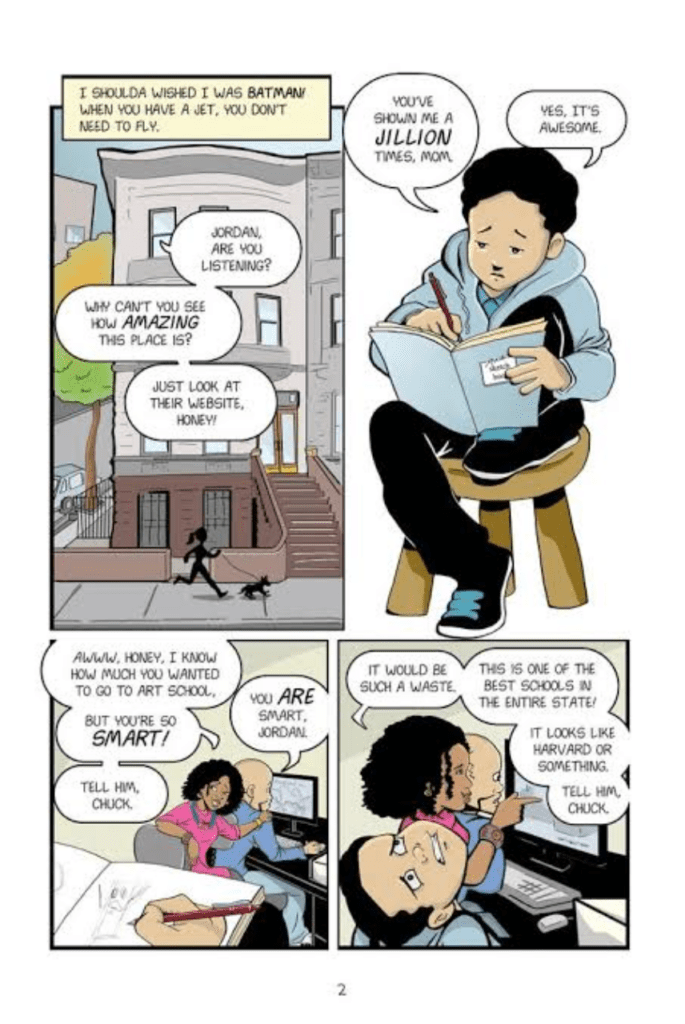
- What happened between these two panels?
- What emotional shift occurred?
- How much time passed?
- Why might the author choose not to show this moment?
This is not a minor skill. It mirrors analyzing subtext in traditional novels.
One effective strategy is projecting two panels and covering the gutter. Have students write a brief inference explaining what occurred in between and justify it using visual evidence.
In my classroom resources, this type of thinking often transitions naturally into structured discussion or debate, because students quickly realize multiple interpretations are possible.
That’s analytical thinking.
2. Teach Color as Symbolism
Color is intentional.
When teaching graphic novels, students should examine:
- Dominant color palettes
- Changes in tone across scenes
- How color reflects power, belonging, isolation, or tension
For example, muted tones may reinforce emotional isolation. Brighter palettes may signal belonging or confidence.
Have students track color shifts across a chapter and connect those shifts to character development or theme. This works particularly well as a scaffold before a Socratic Seminar because it gives students concrete visual evidence to bring into discussion.
Color analysis elevates comprehension into interpretation.
3. Teach Facial Expression and Body Language
Graphic novels require continuous inference.
Before students analyze dialogue, have them:
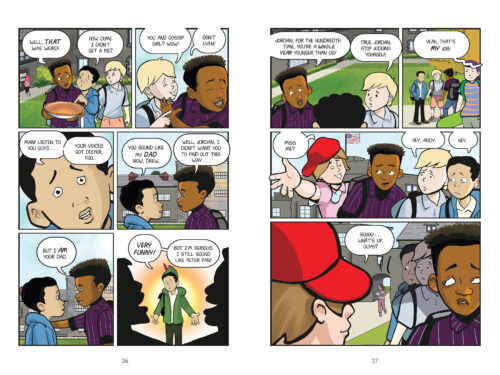
- Cover the speech bubbles
- Focus on posture and facial expression
- Infer emotional state
- Predict possible dialogue
Then reveal the text.
When teaching graphic novels, this exercise forces students to reconcile visual cues with written words. When they conflict, that tension becomes a powerful discussion point.
This is especially effective when paired with figurative language scavenger hunts or theme-based hexagonal thinking activities, where students must connect body language to internal conflict or motivation.
4. Teach Panel Size and Pacing
Panel structure controls time and emphasis.
Large panels:
- Slow pacing
- Signal importance
- Highlight emotional weight
Small panels:
- Create urgency
- Compress action
- Speed the narrative
Ask students:
- Why is this moment stretched?
- Why is this action compressed?
- What does the pacing tell us about significance?
When teaching graphic novels intentionally, students begin to see panel structure the way they analyze paragraph length or sentence rhythm in prose.
That’s structural literacy.
5. Teach Framing and Perspective
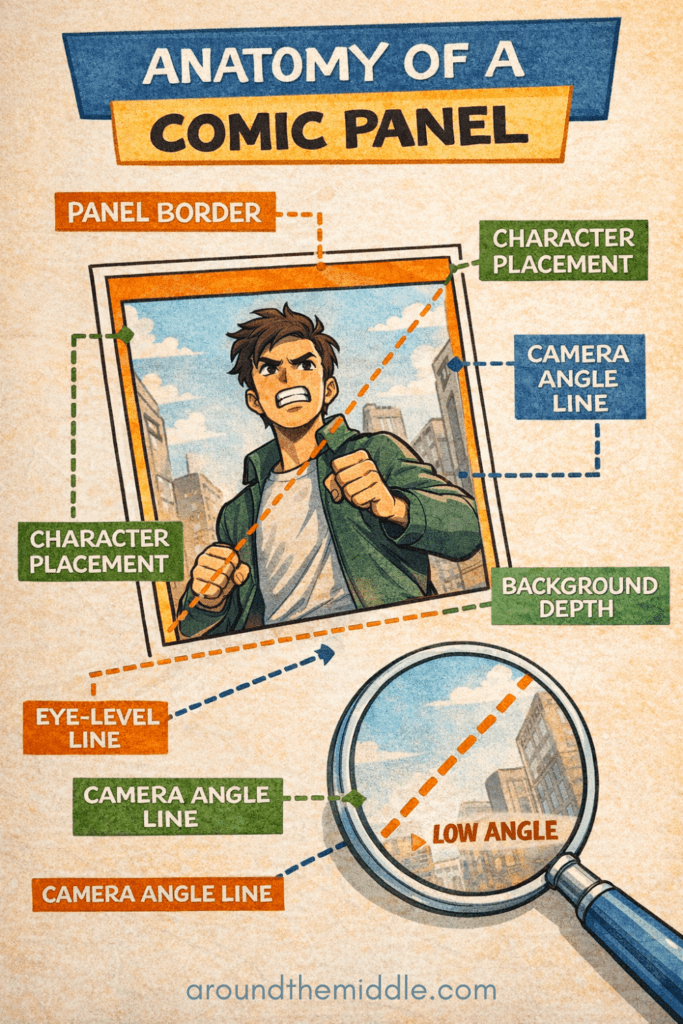
Graphic novels use cinematic techniques.
Students should analyze:
- Close-up vs. wide shot
- High angle vs. low angle
- Character placement within the frame
Ask:
- Who appears powerful?
- Who appears isolated?
- How does framing reinforce theme?
This works particularly well before evidence-based debates. When students must argue whether a character holds power in a scene, visual framing becomes part of their textual evidence.
Now they are citing not just dialogue—but structure.
That’s rigor.
Making Teaching Graphic Novels Systematic
If you want long-term impact, these strategies cannot be one-off lessons.
They should become a framework.
This is why I’ve built a full 8-week graphic novel unit designed to make teaching graphic novels structured, repeatable, and academically challenging. It layers:
- Mastering the Basics: Students learn the “ABCs” of comics, like identifying panels, gutters, and speech bubbles to understand how a page is built.
- Reading the Gaps: Readers practice “filling in the blanks” for actions that happen in the white space between panels.
- Color and Mood: Students discover how artists use specific color palettes and brightness as a shortcut to show emotion.
- Angles and Power: The unit explores how camera angles and panel sizes make characters look powerful or weak.
- Tracking Symbols: Learners spot recurring symbols (motifs) that appear throughout the book to reveal the story’s big message.
- Deep Analysis: Students move from just describing a picture to explaining why the artist chose to draw it that wa
The goal is not activity overload.
The goal is coherence.
Teaching Graphic Novels Is Teaching Complex Literacy
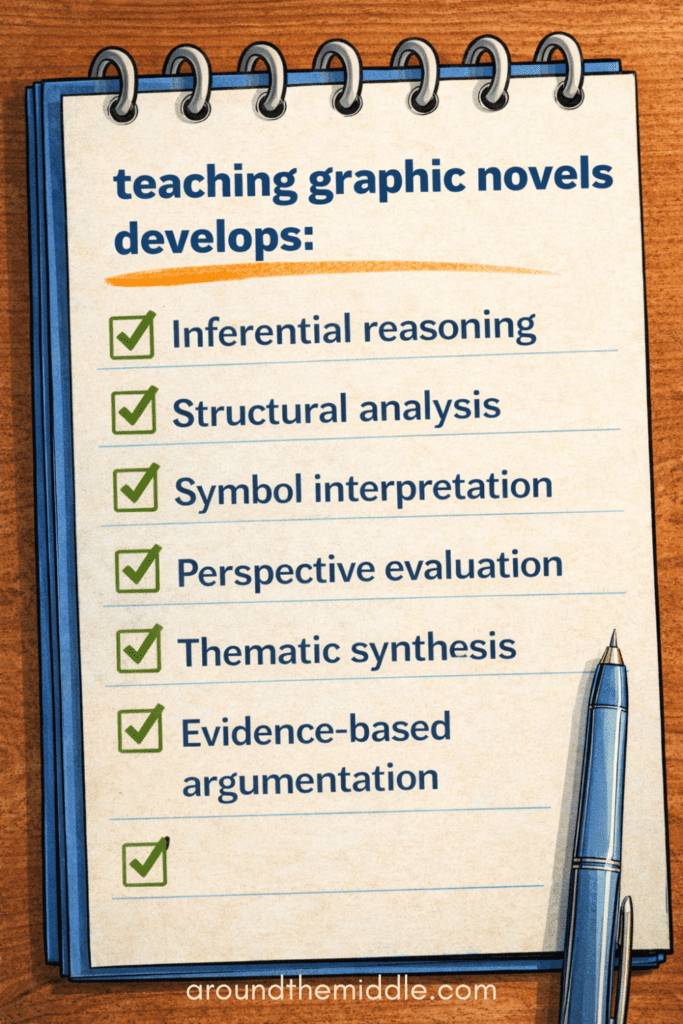
When done intentionally, teaching graphic novels develops:
- Inferential reasoning
- Structural analysis
- Symbol interpretation
- Perspective evaluation
- Thematic synthesis
- Evidence-based argumentation
Graphic novels are not easier texts.
They are layered texts.
And when students learn how to read them properly, engagement rises and academic depth follows.
Coming Next Week
In Week 4 of this series, we’ll shift from analysis to implementation:
How to Build a Rigorous Graphic Novel Unit That Lasts 6–8 Weeks
We’ll cover:
- Pacing a full-unit arc
- Balancing engagement with accountability
- Integrating Socratic Seminar effectively
- Avoiding common pitfalls that weaken rigor
If you are serious about elevating your instruction while maintaining student engagement, you won’t want to miss it.
Happy teaching!