Teaching Graphic Novels in the Classroom: The Complete Guide for Upper Elementary and Middle School
Graphic novels are no longer just “reluctant reader books.” When taught well, they develop visual literacy, inferential thinking, and deep literary analysis. In fact, many graphic novels require students to interpret symbolism, panel structure, perspective, and visual storytelling in ways traditional novels do not.
Yet many teachers still wonder how to teach them with real academic rigor.
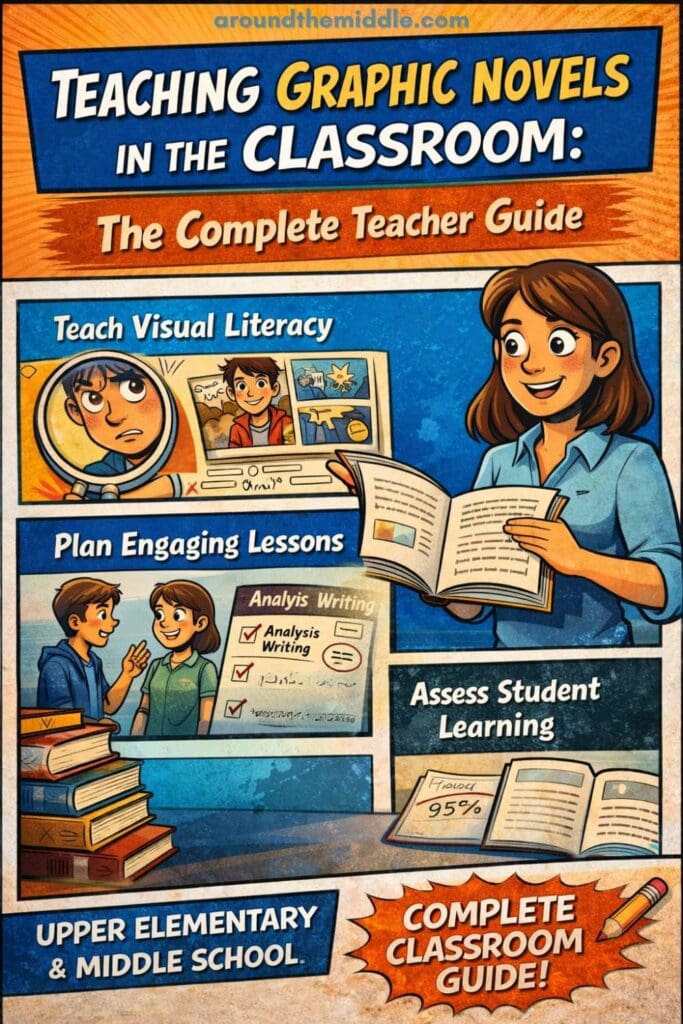
This guide will walk you through the core strategies for teaching graphic novels effectively, from selecting the right texts to assessing student understanding. If you’re new to teaching graphic novels—or want to strengthen your approach—this article will give you the framework you need.
Throughout the guide, you’ll also find links to deeper articles that explore each part of the process in detail.
Why Teaching Graphic Novels Builds Academic Rigor
One of the biggest misconceptions about graphic novels is that they are easier than traditional texts. In reality, they require students to process two layers of information at once: visual and written language.
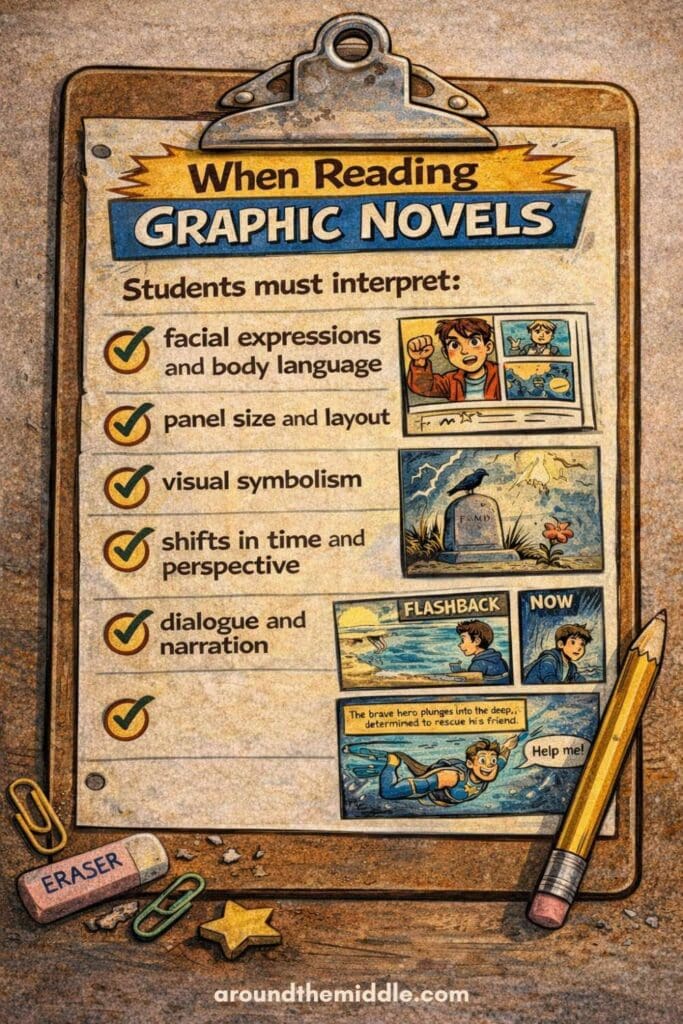
Students must interpret:
• facial expressions and body language
• panel size and layout
• visual symbolism
• shifts in time and perspective
• dialogue and narration
This combination pushes students to think critically and make inferences from visual clues, which strengthens higher-order thinking skills.
Graphic novels also encourage discussion because students often interpret panels differently. That makes them powerful tools for class debates, theme analysis, and evidence-based arguments.
If you want to explore how graphic novels develop deeper literacy skills, read the full guide:
➡ Why Teaching Graphic Novels Builds Academic Rigor
Choosing the Best Graphic Novels for the Classroom
Not every graphic novel works well for classroom study. The strongest titles have layered themes, complex characters, and meaningful visual storytelling.
When selecting graphic novels for upper elementary or middle school, look for texts that include:
Clear thematic depth
Stories that explore identity, justice, courage, friendship, or belonging.
Strong visual symbolism
Images that carry meaning beyond the dialogue.
Character development
Characters who change, struggle, and grow.
Discussion potential
Moments that invite debate or interpretation.
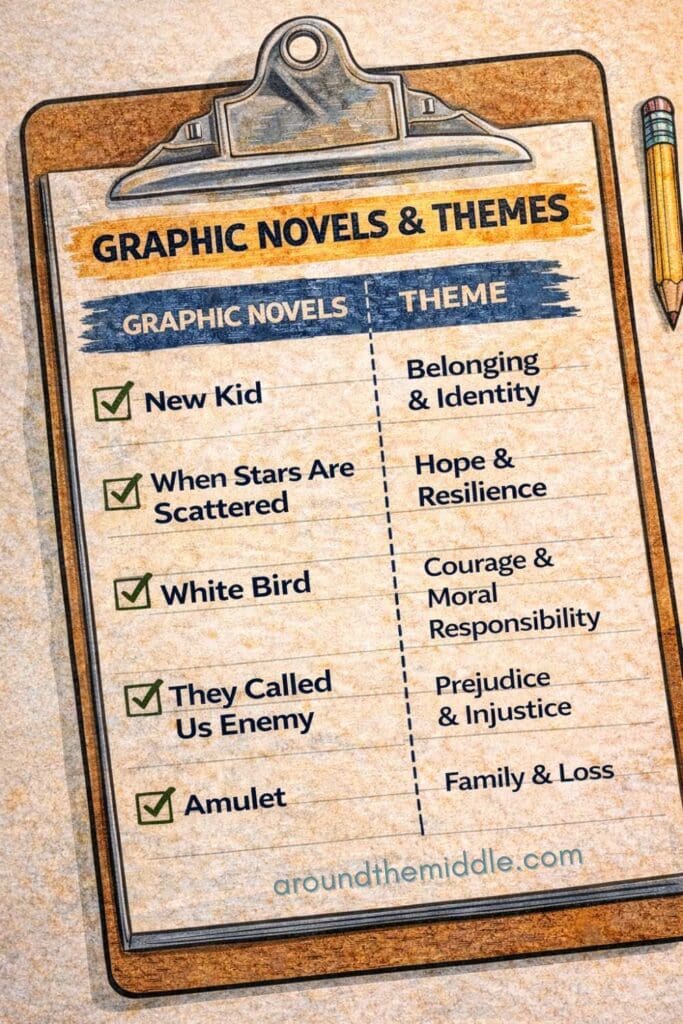
Popular classroom graphic novels often include titles like:
• New Kid
• El Deafo
• American Born Chinese
• Amulet
• Dragon Hoops
If you want a deeper look at selecting powerful texts, read:
➡ Choosing the Best Graphic Novels for the Classroom
Teaching Students How to Read Graphic Novels
One challenge teachers often face is that students don’t automatically know how to read graphic novels analytically.
Many students read them quickly, focusing on the dialogue while ignoring the visual storytelling. Teaching graphic novels effectively means helping students learn to notice what artists are communicating through images.
Students should learn to analyze:
Panel structure
How panel size, shape, and sequence affect pacing.
Perspective and framing
What the reader sees and how that influences interpretation.
Facial expressions and body language
How characters communicate emotion visually.
Color and symbolism
How visual elements reinforce theme.
Explicitly teaching these skills transforms graphic novels from quick reads into rich texts for literary analysis.
For classroom strategies and discussion ideas, read:
➡ Teaching Students How to Read Graphic Novels
Teaching Graphic Novels with Academic Rigor
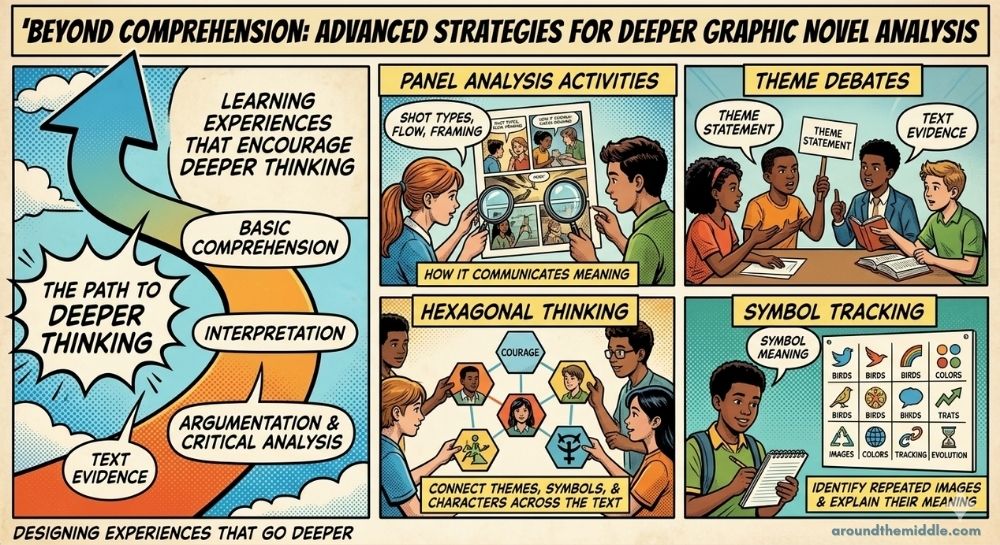
Once students understand how to read graphic novels closely, the next step is designing learning experiences that encourage deeper thinking.
Some of the most effective strategies include:
Panel analysis activities
Students analyze how a single panel communicates meaning.
Theme debates
Students use evidence from the text to support or challenge a theme statement.
Hexagonal thinking
Students connect themes, symbols, and characters across the text.
Symbol tracking
Students identify repeated images and explain their meaning.
These strategies move students beyond simple comprehension toward interpretation and argument.
You can explore these instructional ideas in detail here:
➡ Teaching Graphic Novels with Academic Rigor
Assessing Student Learning When Teaching Graphic Novels
Assessment is often where teachers struggle the most with graphic novel units. Traditional comprehension questions rarely capture the full depth of visual storytelling.
Instead, assessments should ask students to analyze how images and text work together.
Effective graphic novel assessments might include:
Panel analysis essays
Students explain how an artist uses visuals to create meaning.
Character arc analysis
Students track how a character changes throughout the story.
Visual rhetoric analysis
Students explain how imagery communicates theme or emotion.
Text comparison tasks
Students compare a graphic novel scene with a prose version.
These types of assessments measure interpretation, evidence use, and analytical writing, making them much more rigorous.
For a full breakdown of graphic novel assessment ideas, read:
➡ Assessing Student Learning When Teaching Graphic Novels
Building a Strong Graphic Novel Unit
A successful graphic novel unit typically includes several phases:
1. Pre-reading preparation
Students learn about context, genre, and visual storytelling.
2. Guided reading and discussion
Students analyze panels, characters, and themes.
3. Deep analysis activities
Students debate ideas, track symbolism, and make connections.
4. Assessment and reflection
Students demonstrate understanding through writing or projects.
This structure ensures that graphic novels are taught as serious literature, not just independent reading material.
Teaching Graphic Novels with Confidence
Graphic novels offer something unique in the classroom. They combine literature and art, inviting students to analyze stories through multiple layers of meaning.
When students learn how to read and interpret visual storytelling, they develop skills that strengthen:
• critical thinking
• inferential reasoning
• discussion and debate
• analytical writing
In other words, teaching graphic novels the right way helps students become stronger readers and thinkers.
If you’re planning a graphic novel unit and want ready-to-use lessons, discussion prompts, and assessment tools, you can explore my complete graphic novel unit designed to work with any graphic novel. It provides everything you need to teach and assess graphic novels with academic rigor in upper elementary and middle school classrooms. Try out lesson 1 for free here! Check out my store for other individual graphic novel activities.
Related Posts in This Series
You may also want to explore the full series on teaching graphic novels:
• Why Teaching Graphic Novels Builds Academic Rigor
• Choosing the Best Graphic Novels for the Classroom
• Teaching Students How to Read Graphic Novels
• Teaching Graphic Novels with Academic Rigor
• Assessing Student Learning When Teaching Graphic Novels
Together, these articles provide a complete framework for planning and teaching an effective graphic novel unit.
Happy teaching!