The Surprising Strength of Teaching Graphic Novels
Graphic novels are no longer fringe texts in the classroom. They are complex, layered, and cognitively demanding works that deserve thoughtful instruction. Teaching Graphic Novels in Upper Elementary and Middle School is not about replacing traditional novels. It is about expanding literacy to include multimodal texts that require students to read words, images, structure, and symbolism simultaneously.
If we treat graphic novels as “easy reads,” we lower the bar. If we teach them intentionally, we raise it.
This post explores why graphic novels belong in the classroom, what makes them rigorous, and how to approach them with depth.
Why Teaching Graphic Novels in Upper Elementary and Middle School Matters
Graphic novels for upper elementary and graphic novels for middle school meet students where they are developmentally — but they do not simplify thinking. They demand it.
In the classroom, graphic novels:
- Require constant inference (what happens between panels)
- Demand interpretation of facial expressions and body language
- Use color and framing symbolically
- Layer text and image to create meaning
Consider:
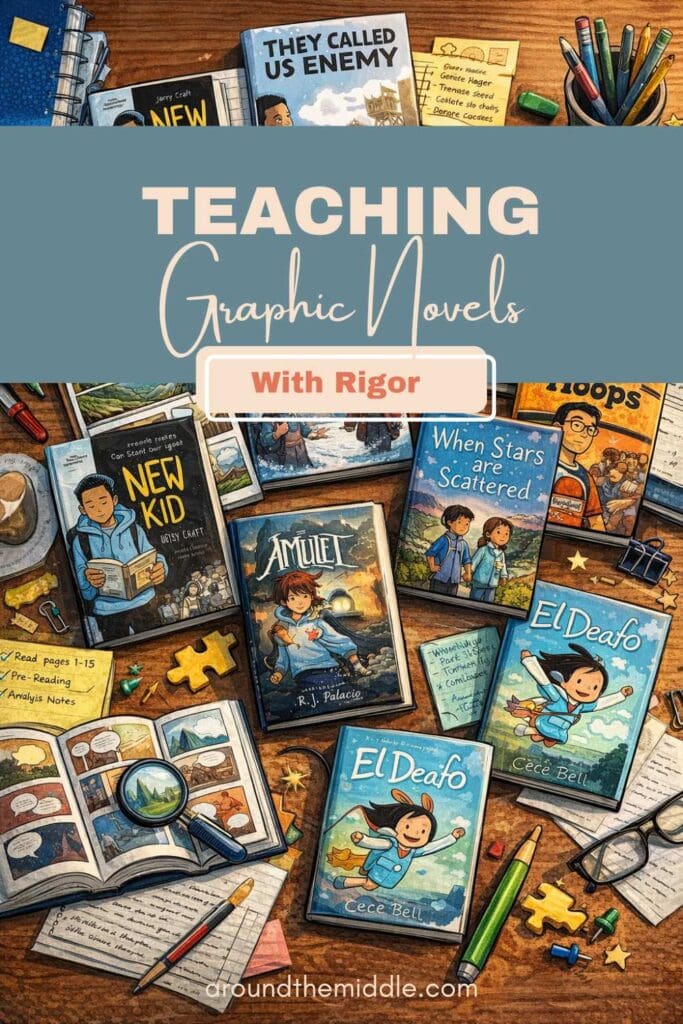
- Graphic Novel New Kid — identity, code-switching, and subtle social hierarchy.
- Graphic Novel Smile — middle school dynamics, insecurity, and resilience.
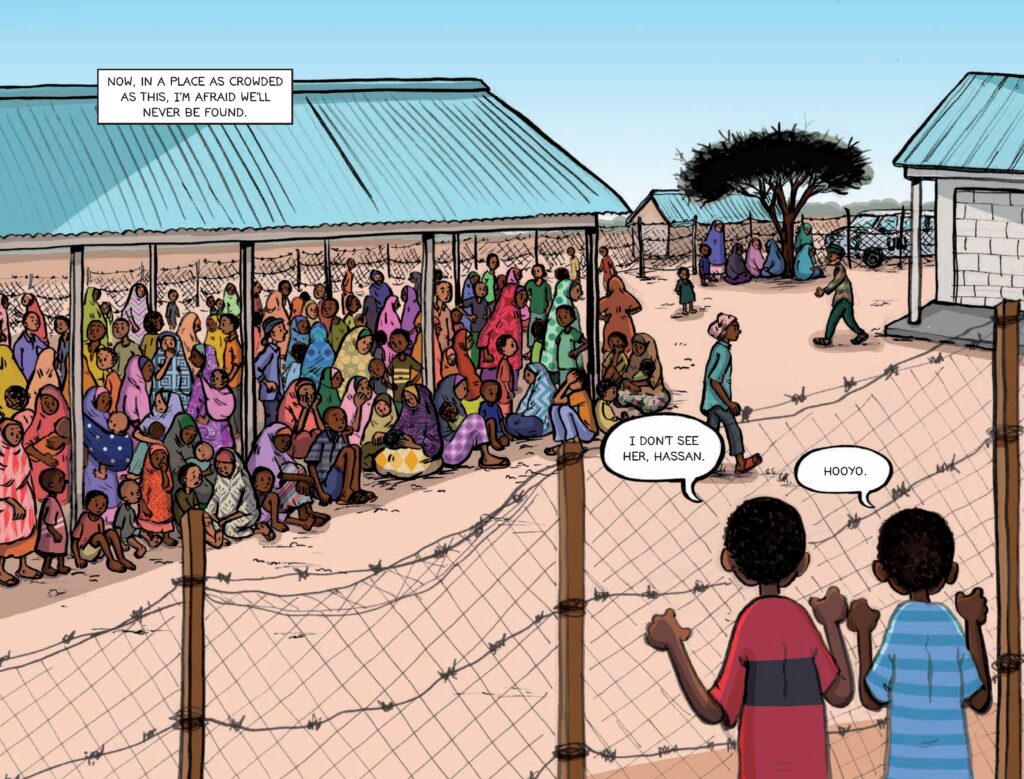
- Graphic Novel When Stars Are Scattered — refugee experiences and moral responsibility.
These are not surface-level stories. They ask students to navigate social complexity, ethical dilemmas, and emotional nuance — often more immediately than prose does.
Are Graphic Novels “Real Reading”?
This question surfaces often, especially in upper grades.
Graphic novels are not easier reading. They are different reading.
Students must:
- Process dialogue and narration
- Interpret panel sequencing
- Infer meaning from gutters (the space between panels)
- Analyze visual symbolism
- Track multiple narrative threads
In Graphic Novel American Born Chinese, parallel storylines demand structural analysis and metaphor interpretation.
In Graphic Novel White Bird, light and shadow are not decorative — they communicate safety, fear, and moral contrast.
In Graphic Novel They Called Us Enemy, historical framing and restrained visual tone amplify injustice.
Graphic novels are multimodal texts. Students are decoding two systems of meaning at once: linguistic and visual. That is cognitive complexity.ds confidence and stamina. Students perform better when the format stays stable.
The Cognitive Demands of Visual Literacy
Teaching visual literacy explicitly transforms graphic novels from engaging reads into rigorous studies.
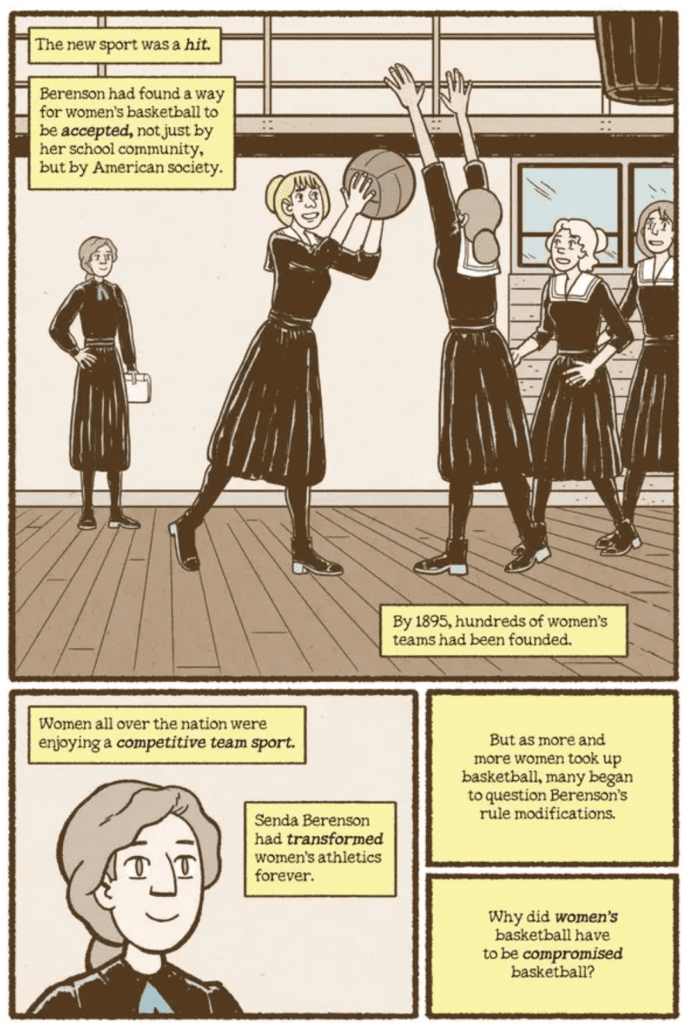
Reading Panels and Gutters
Students must determine what happens between frames. That inference work strengthens analytical thinking.
In Graphic Novel Dragon Hoops, nonlinear storytelling requires students to track shifting timelines and narrative voice.
Analyzing Color and Perspective
Color can indicate mood shifts, flashbacks, power dynamics, or symbolic transformation.
In Graphic Novel El Deafo, superhero imagery reframes disability as empowerment — a visual metaphor students must interpret.
In Graphic Novel Amulet, scale and perspective communicate danger, hierarchy, and world-building without lengthy exposition.
Understanding Visual Bias when teaching graphic novels
Camera angles, panel size, and character placement influence how readers perceive events.
When students analyze these choices, they move beyond comprehension into author craft..
Graphic Novels for Upper Elementary vs Middle School
Not all graphic novels serve the same instructional purpose. Developmental alignment matters.
teaching graphic novels – Upper Elementary Focus
Graphic novels for upper elementary often emphasize:
- Character growth
- Friendship dynamics
- Identity formation
- Theme introduction
Examples include:
- Graphic Novel The Bad Guys
- Graphic Novel Smile
- Graphic Novel Star Gazing
These texts provide accessible entry points into theme analysis and character arc work.
teaching graphic novels – Middle School Focus
Graphic novels for middle school often invite deeper critique:
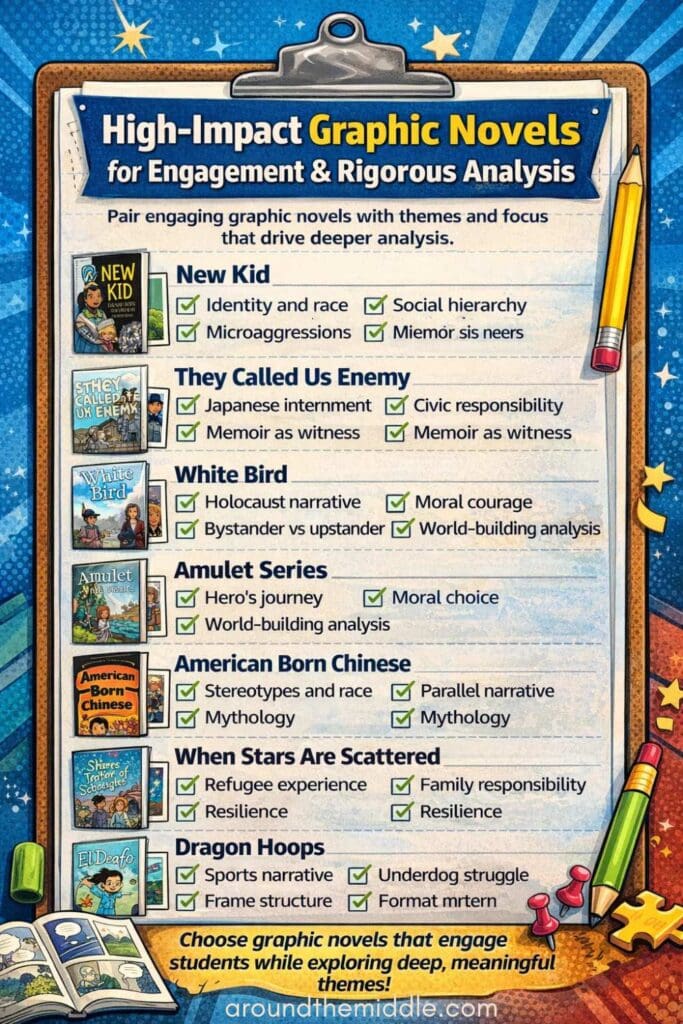
- Social systems
- Moral ambiguity
- Historical injustice
- Structural experimentation
Examples include:
- Graphic Novel New Kid
- Graphic Novel American Born Chinese
- Graphic Novel Nimona
- Graphic Novel They Called Us Enemy
These works support ethical debate, symbolism analysis, and structural study at a higher level.
Moving Beyond Engagement to Academic Rigor
Engagement is not the goal. It is the entry point.
Rigorous graphic novel study includes:
- Analytical paragraphs citing specific panels as evidence
- Theme tracking across visual and textual layers
- Socratic seminars grounded in visual symbolism
- Ethical debates based on character decisions
- Comparative analysis between prose and graphic adaptations
- Hexagonal thinking to map theme, conflict, and character relationships
For example:
- Graphic Novel White Bird invites debate about moral courage and complicity.
- Graphic Novel When Stars Are Scattered raises questions about responsibility versus childhood.
- Graphic Novel Amulet supports hero’s journey analysis and power ethics discussion.
If assessment expectations are rigorous, instruction naturally follows.
Graphic Novels Are Not an Easier Option — They Are a Different Literacy Demand
Teaching Graphic Novels in Upper Elementary and Middle School requires intentional instruction. When we explicitly teach panel analysis, symbolism, structural design, and visual rhetoric, we elevate these texts to their rightful place alongside traditional novels.
Graphic novels are not a shortcut.
They are a sophisticated form of storytelling that mirrors the multimedia landscape students already navigate daily. When we teach them with depth, we prepare students for complex, multimodal literacy beyond the classroom.
What Comes Next in the Series
In the next post, we will examine specific graphic novels that combine high engagement with substantial literary content — and how to choose the right one for your classroom goals.
Happy teaching!