Teaching Graphic Novels to Unlock Fearless and Focused Discussions
When teaching graphic novels, engagement is easy.
Rigor is intentional.
When teachers talk about teaching graphic novels, the conversation often stops at motivation: reluctant readers are hooked, discussions are lively, students actually finish books. That matters. But engagement alone is not the goal.
The goal is deeper thinking. Academic language. Transferable reading skills. Meaningful discourse.
If you missed the first post in this series on selecting high-impact titles, you can start here. Today, we move beyond choosing great texts and into something more important:
How do you make teaching graphic novels academically robust?
The answer is simple but strategic: organize instruction around big ideas—not random activities.
Big Idea #1: Teaching Graphic Novels Builds Advanced Reading Skills
One of the biggest misconceptions about teaching graphic novels is that they are “easier” than traditional prose.
They are not.
They require layered inference across text and image.
When students read Graphic Novels like:
They must:
- Interpret symbolism in both words and visuals
- Track multiple narrative threads
- Analyze point of view
- Evaluate character motivation
- Recognize theme development across panels
Graphic novels demand synthesis.
To make teaching graphic novels rigorous, instruction could include:
- Structured hexagonal thinking for theme connections
- Figurative language scavenger hunts – With so few words on each page, the author is VERY intentional with the language they use.
- Pre-reading scaffolds that frontload historical or cultural context
- Evidence-based debates and Socratic seminars
These are not “extras.” They are vehicles for higher-order thinking.
When students defend claims using panels as evidence, they are practicing analytical reading at a high level.
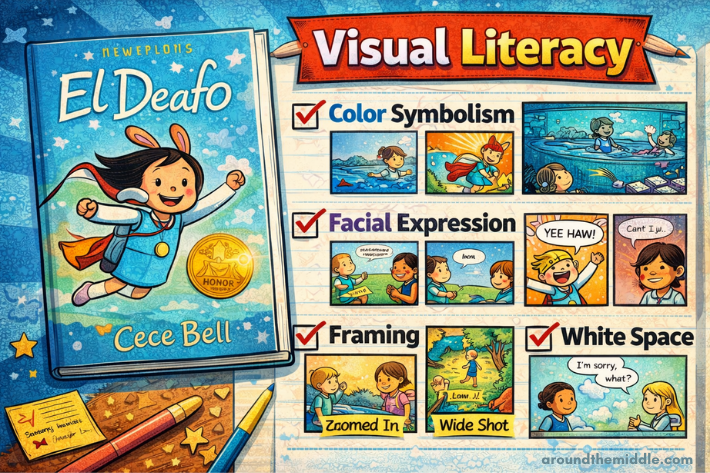
Big Idea #2: Graphic Novels Develop Visual Literacy
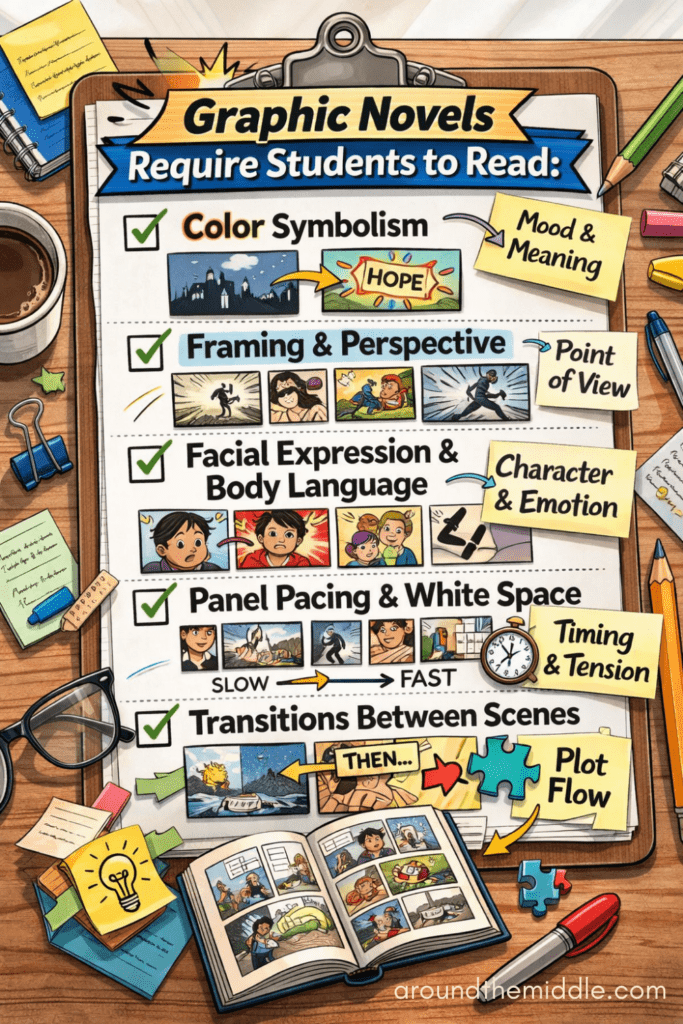
Visual literacy is not intuitive. It must be taught.
Graphic novels require students to read:
- Color symbolism
- Framing and perspective
- Facial expression and body language
- Panel pacing and white space
- Transitions between scenes
Consider:
- Graphic Novel El Deafo and its use of visual metaphor
- Graphic Novel Dragon Hoops and its layered narrative structure
- Graphic Novel Amulet and its world-building through art
If students only read dialogue bubbles, they are missing half the text.
Teaching graphic novels with rigor means slowing down.
It means:
- Close panel analysis
- Comparing text-only scenes to illustrated versions
- Using escape rooms strategically to reinforce comprehension and synthesis
- Requiring written justification tied to specific visual evidence
When students explain how a shift in panel size increases tension, they are engaging in craft analysis at a sophisticated level.
Big Idea #3: Graphic Novels Creates Space for Complex Conversations
Graphic novels often center on identity, belonging, injustice, and resilience. These are not light topics. They are necessary ones.
Texts like:
- Graphic Novel When Stars Are Scattered
- Graphic Novel Stargazing
- Graphic Novel Awkward
Invite conversations about:
- Cultural identity
- Refugee experiences
- Social belonging
- Moral courage
- Personal growth
But meaningful discussion does not happen accidentally.
Teaching graphic novels with depth requires structure:
- Socratic Seminars grounded in textual evidence
- Formal debate formats
- Discussion stems that require analysis, not opinion
- Written reflections that synthesize viewpoints
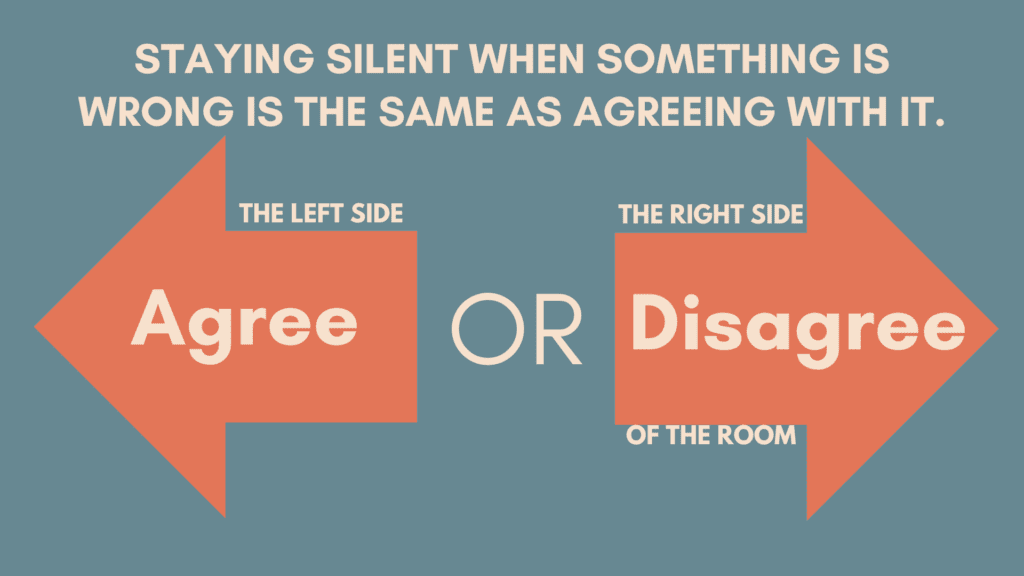
When students cite both dialogue and imagery to support claims, they practice academic discourse that transfers across genres.
This is where graphic novels become powerful.
They make difficult topics accessible without simplifying the thinking.
Big Idea #4: Teaching Graphic Novels Supports Skill Transfer
A strong unit does not live in isolation.
The skills developed while teaching graphic novels should transfer to:
- Traditional novels
- Informational texts
- Literary analysis essays
- Argument writing
Hexagonal thinking builds synthesis skills.
Debates strengthen claim-evidence-reasoning structures.
Socratic Seminars develop academic listening and speaking standards.
Graphic novels are not a break from rigorous reading.
They are a training ground for it.
This is also where a long-term framework matters. A graphic novel unit allows teachers to build:
- Genre-specific vocabulary
- Craft analysis routines
- Discussion norms
- Writing expectations
When students repeatedly practice analyzing panel structure, symbolism, and theme development, they internalize habits that elevate all reading. If you’re looking for a ready-to-go unit, check out my TPT store.
Big Idea #5: Graphic Novels Increase Access Without Lowering Standards
Graphic novels expand access.
They support:
- Multilingual learners
- Struggling readers
- Students with processing challenges
But access is not the same as simplification.
Consider Graphic Novel The Bad Guys for younger readers. The structure may be lighter, but comprehension still requires:
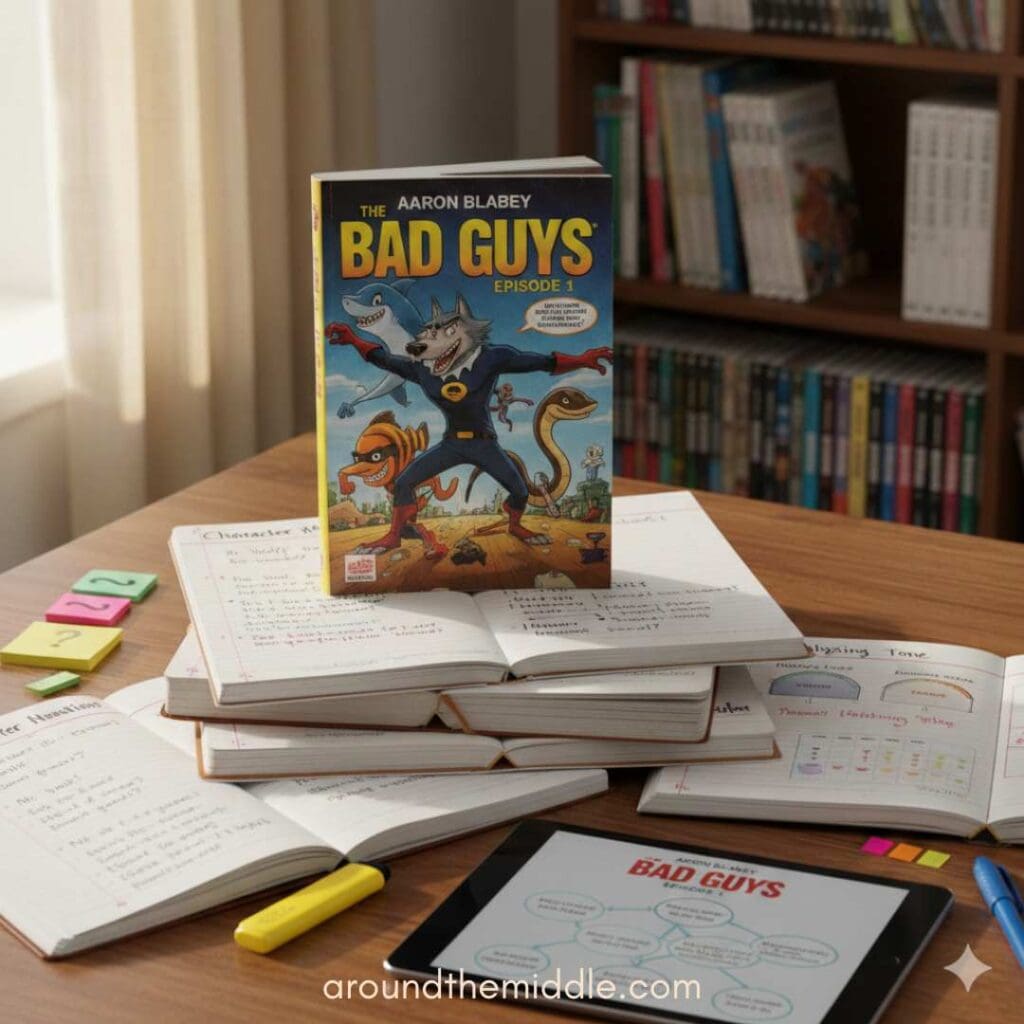
- Identifying character motivation
- Tracking plot shifts
- Recognizing humor techniques
- Analyzing tone
Teaching graphic novels effectively means scaling expectations—not lowering them.
The questions change.
The scaffolds shift.
The depth remains.
Accessible does not mean shallow.
Stop Treating Graphic Novels as “Extra”
Too often, graphic novels are used:
- As end-of-year fillers
- As independent reading alternatives
- As “fun” breaks from real literature
That mindset limits their impact.
When teaching graphic novels intentionally:
- With layered questioning
- With structured thinking routines
- With debate and Socratic Seminar
- With evidence-based writing
They become some of the most intellectually demanding texts in the classroom.
If you are building a long-term framework for teaching graphic novels, start by anchoring instruction to big ideas—not isolated activities.
Next week, we will move into implementation:
Post 3: Structuring a Powerful Graphic Novel Unit from Start to Finish
Because engagement gets students reading.
Rigor keeps them thinking.
Happy teaching!