Next-Level Novel Study Activities for Deeper Thinking and Student Growth
When students close the final page of a novel, the learning shouldn’t end — it should deepen. The final stage of a novel study is where reflection, synthesis, and lasting understanding take shape. Too often, though, this phase is reduced to novel study activities in the form of a quick quiz or comprehension test.
Let’s move beyond “read, test, move on.” These novel study activities for after reading will help your students make meaningful connections, evaluate themes, think critically, and have a bit of fun — long after the story ends.
(Check them out here if you missed Part 1 on pre-reading activities, or Part 2 on during-reading activities.)
Why the End of a Novel Matters More Than You Think
After reading, students are finally equipped with the full picture — the character arcs, resolutions, and deeper themes. This makes it the perfect time for novel study activities that encourage reflection and transformation.
When teachers design after-reading tasks that invite connection and interpretation, they move learning from short-term recall to enduring understanding.
Reflection encourages students to:
- Revisit their assumptions and early predictions.
- Connect fictional events to real-world ideas or personal values.
- Synthesize lessons about empathy, resilience, justice, and identity.
👉 If you’ve followed along with Part 1 (pre-reading) and Part 2 (during reading), this is where all that groundwork pays off — curiosity and comprehension now evolve into critical thinking.
Novel Study Activities That Leave a Lasting Impact
When the final chapter closes, your students shouldn’t just finish a story — they should internalize it. These novel study activities for after reading are designed to do exactly that: transform comprehension into reflection, and analysis into ownership.
Below are three classroom-tested approaches that consistently drive deep learning, critical thinking, and engagement.
A. Novel Debates: Bringing Opinions to Life
How it works:
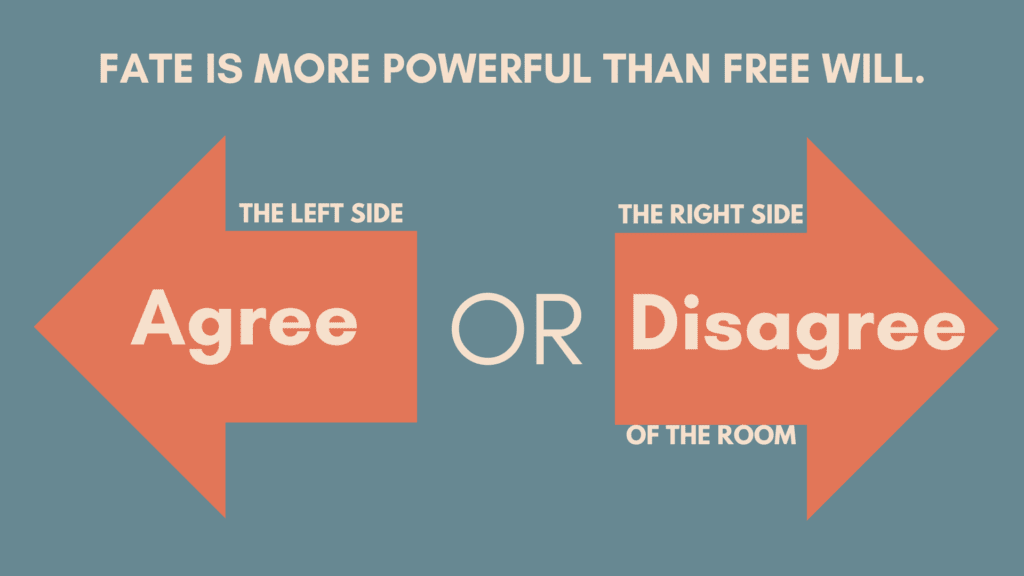
Debates turn literary analysis into active, evidence-based discussion. Students revisit big ideas or ethical dilemmas from the novel and must take a stand — agree or disagree — then defend their viewpoint using specific text evidence.
Why it works:
Debates give students a voice. They encourage reasoning, empathy, and persuasive communication — all anchored in textual understanding. When a student says, “I disagree because in the book, Mia shows…,” that’s genuine mastery.
How to create it:
- Choose 5–10 thought-provoking statements that align with your novel’s themes.
- e.g., “Rules are meant to be broken,” or “One person can change a community.”
- Assign sides (agree/disagree) or let students choose.
- Have each team gather evidence from the text.
- Use structured debate rounds — opening argument, rebuttal, and reflection.
Wrap up by asking: “Did the ending change your opinion?” This helps students connect the story’s resolution to their evolving perspective.
No time to create debate prompts from scratch?
Grab my ready-to-use Novel Debate Packs — complete with teacher talking points, discussion scaffolds, and student reflection prompts.
B. Novel-Specific Escape Rooms: Learning That Feels Like Play
How it works:
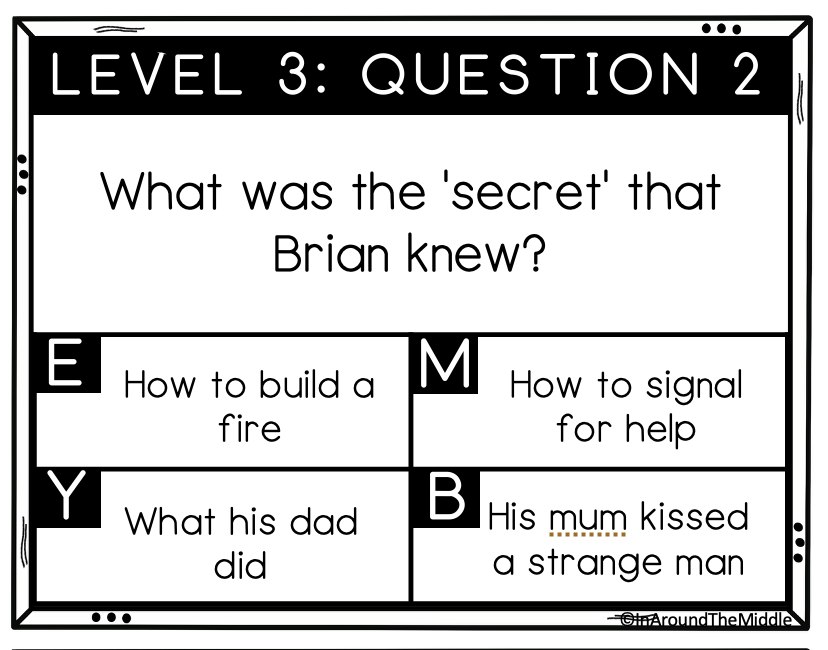
A classroom escape room transforms comprehension review into a game. Students “unlock” each challenge by answering content-based questions, solving puzzles, or decoding figurative language.
Each task ties back to key story elements — plot, character, setting, or theme — so every moment of play reinforces academic skills.
Why it works:
Escape rooms novel study activities combine collaboration, recall, and critical thinking. The timer adds excitement, while the puzzles require students to apply their understanding — not just remember it.
Students who might otherwise disengage suddenly become invested in “winning,” which naturally drives learning persistence.
How to create it:
- Choose 4–5 comprehension or literary analysis checkpoints (e.g., character traits, plot sequencing, theme connections).
- Turn each checkpoint into a puzzle — a riddle, word scramble, cipher, or hidden code.
- Provide story-based hints to maintain narrative relevance.
- End with a final “unlock” moment — like solving for a password or clue phrase.
A digital version (Google Slides, PowerPoint) works brilliantly for tech-integrated classrooms.
No time to design puzzles yourself?
You can use my Novel-Specific Figurative Language Scavenger Hunts or Escape Room Reviews — editable and ready to go for popular novels.
C. Hexagonal Thinking: Novel Study activities that Connect Ideas Visually
How it works:
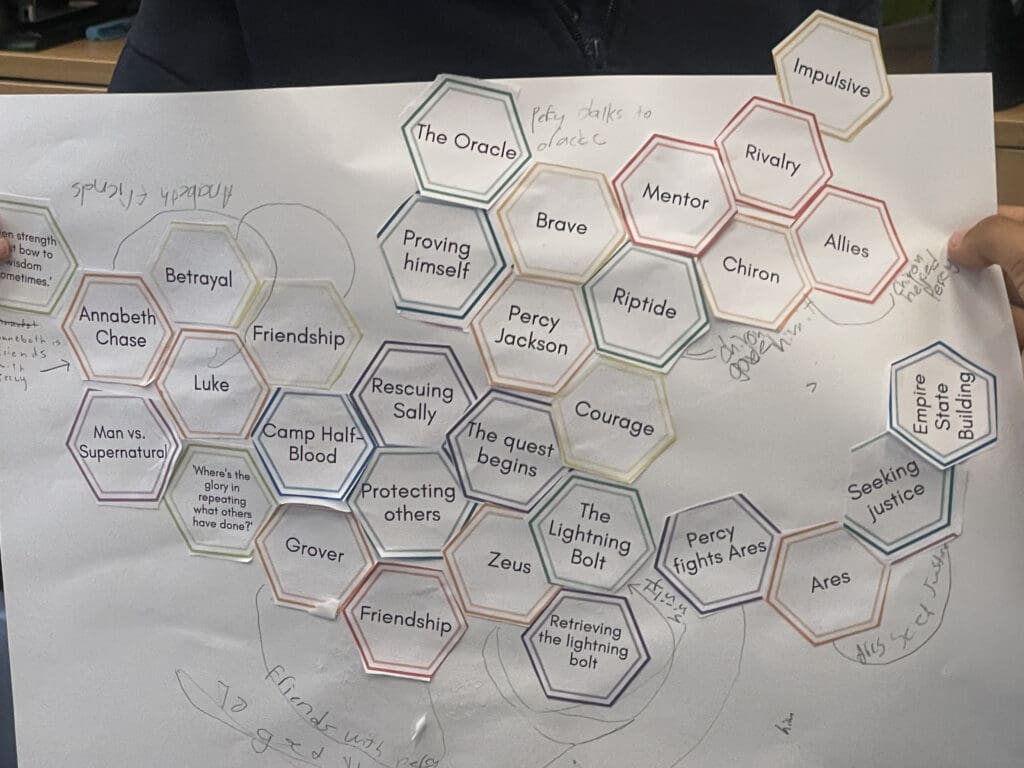
Hexagonal thinking is a strategy where students write ideas, characters, symbols, or themes on hexagons and physically connect them by overlapping sides that share a relationship.
For example, a student might link “Bravery” to “Jonas” in The Giver, then link “Bravery” to “Change”, explaining the reasoning each time.
Why it works:
This method requires synthesis — the highest level of critical thinking. Students must justify every connection, which strengthens analytical reasoning and communication.
It also creates a visual map of understanding, making abstract concepts concrete.
How to create it:
- Provide hexagon templates (printable or digital).
- Assign key story concepts, or let students generate their own.
- Encourage collaboration — small groups discussing each link.
- Wrap up with reflection: “Which connections surprised you most?”
It’s particularly effective after reading because students can now see how early events connect to later themes. I’ve created an entire post here on how to create your own.
No time to set up a template?
My novel-specific Hexagonal Thinking Templates come pre-filled with prompts and editable hexagons — perfect for post-reading synthesis or classroom displays.
Free and Low-Prep Novel study activities Teachers Can Use Tomorrow
Not every after-reading task needs to be elaborate. Sometimes the simplest ideas make the biggest impact. These low-prep novel study activities for after reading help students process their thinking with minimal setup.
A. Character Interviews or “What Happens Next?” Tasks
How it works:
Students write or perform interviews with a character or extend the story in a creative way — what happens after the final page?
Why it works:
This blends imagination with inference. Students must understand motivation, tone, and character growth to stay true to the author’s intent.
Try this:
- Use open-ended prompts: “What lesson did you learn?” or “What would you say to the author?”
- Host an “author panel” where students answer as their characters.
- Record interviews as podcasts or video reflections for a modern twist.
B. Thematic Reflection Journals
How it works:
Students respond to reflective prompts that connect the novel’s themes to their own experiences.
Why it works:
It strengthens empathy and metacognition — two of the most powerful outcomes of reading. Journaling helps students identify what a story means to them personally.
Try this:
Prompts like:
- “Which moment in the story changed your thinking?”
- “What does this novel teach about courage, friendship, or justice?”
- “How do the story’s themes show up in the real world?”
For practical guidance on teaching theme and helping students move beyond “the moral of the story,” read my related post: Teaching Theme Without Killing the Joy of Reading.
C. Whole-Class “Book Awards” Ceremony
How it works:
Students nominate and vote for creative awards such as:
🏆 Most Relatable Character
🏆 Most Surprising Plot Twist
🏆 Best Line or Quote
Why it works:
It reinforces comprehension through celebration. Students revisit the text to justify nominations and discuss what made those moments meaningful.
Try this:
Use printable or digital ballots, have students write “acceptance speeches,” and end with a reflection: “What makes a story award-worthy?”
D. “How Would the Story Change If…” Discussions
How it works:
Pose hypothetical “what if” questions that challenge students to reimagine the story’s direction.
Why it works:
It requires higher-order thinking — students must deeply understand the text to modify it meaningfully.
Try this:
- “What if the main character made the opposite choice?”
- “What if the story were set in a different time period?”
- “What if the ending were rewritten from another perspective?”
Encourage students to defend their ideas with evidence.
4. Support and novel study activities Freebies for Teachers
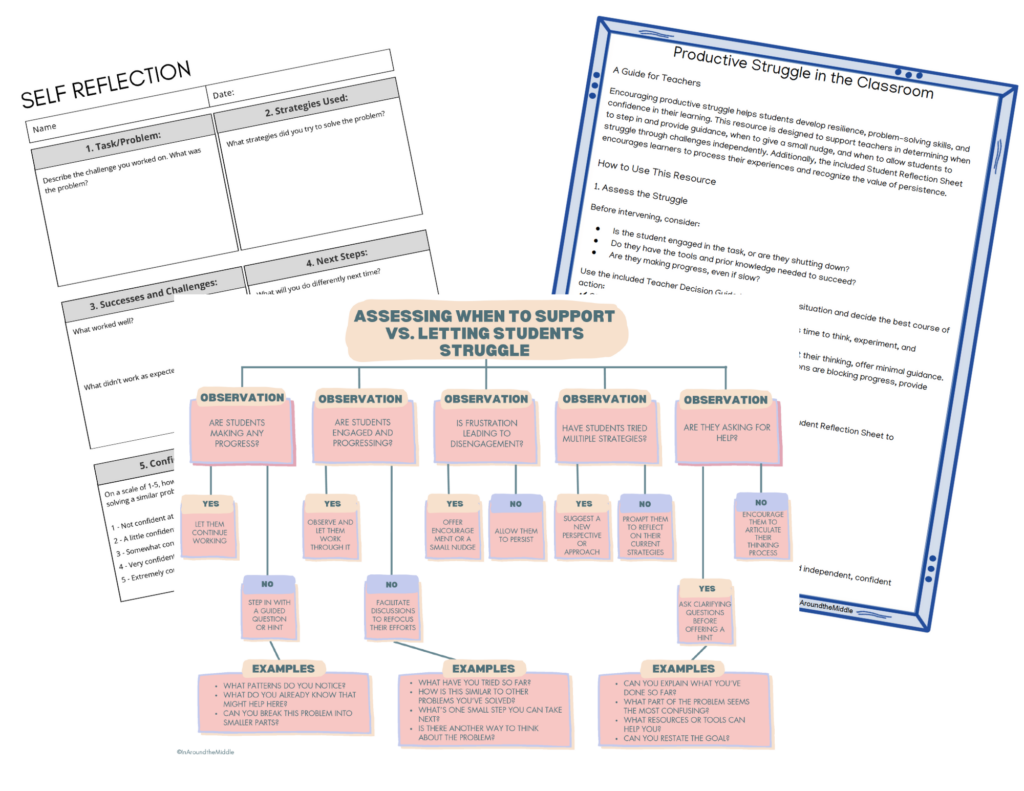
Meaningful after-reading work doesn’t require overcomplication — just intention. My Productive Struggle Freebie helps teachers guide students toward deeper reflection without rescuing them from the hard thinking.
Encourage your students to sit with ideas, to question them, and to make meaning from what they’ve read — that’s where the learning solidifies.
5. Series Wrap-Up and Reflection
A balanced novel study moves through three deliberate phases:
- Before Reading — spark curiosity
- During Reading — build comprehension and analysis
- After Reading — promote reflection and synthesis
When you plan all three intentionally, your classroom reading program becomes more than skill practice — it becomes a space for real intellectual growth.
Here’s a screenshot-friendly mini checklist to keep on hand as you plan your next unit:
| Stage | Focus | Example Activities |
|---|---|---|
| Before Reading | Build curiosity & background knowledge | Scavenger hunts, pre-reading debates, context research |
| During Reading | Deepen understanding & engagement | Figurative language hunts, discussion cards, reading reflections |
| After Reading | Reflect, synthesize & connect | Debates, escape rooms, creative responses, hexagonal thinking |
📸 Take a screenshot of this chart and keep it handy when planning your next novel study.
Final Thought
Finishing a novel shouldn’t mark the end of learning — it should spark the beginning of reflection. With these novel study activities for after reading, you’ll help your students move from comprehension to curiosity, and from finishing a book to feeling and remembering it.
Happy teaching!