Reignite Story Understanding: Teaching Plot Structure and Conflict Made Powerful
When it comes to teaching narrative structure, plot and conflict are the beating heart of every story. They’re what drive the characters’ decisions, create momentum, and keep readers invested until the final page. Yet, many students can summarize events without truly understanding why things happen or how tension builds. This is what makes explicitly teaching plot structure and conflict so important.
Teaching plot structure and conflict explicitly gives students the tools to see stories not as a sequence of events, but as a chain of cause and effect. In this post, we’ll explore how to teach these elements using Restart by Gordon Korman — a classroom-friendly novel that’s rich in both internal and external conflict.
Why Teaching Plot Structure and Conflict Matters
When students understand plot and conflict, they become more than passive readers — they become analytical thinkers who can trace a character’s growth through challenges and change. Plot helps students follow a story’s structure, while conflict helps them interpret a character’s motivation and the story’s deeper themes.
In Restart, Chase Ambrose’s amnesia sets the stage for both external conflict (his strained relationships and social fallout) and internal conflict (his struggle to reconcile his past identity with who he wants to become). The story’s layered structure makes it an ideal model for analyzing how tension drives transformation.
When students move beyond simple recall of story events, they start to think more critically about why things happen and how authors create tension. You can read more about fostering that kind of higher-order thinking in this post on transforming classroom critical thinking
Teaching Plot Structure: The Story’s Framework
Start with the classic plot diagram — sometimes called Freytag’s Pyramid — which includes:
- Exposition – setting, characters, and background
- Rising Action – events that build tension and complicate the main problem
- Climax – the emotional turning point
- Falling Action – events that follow the climax
- Resolution – how the conflict is ultimately addressed
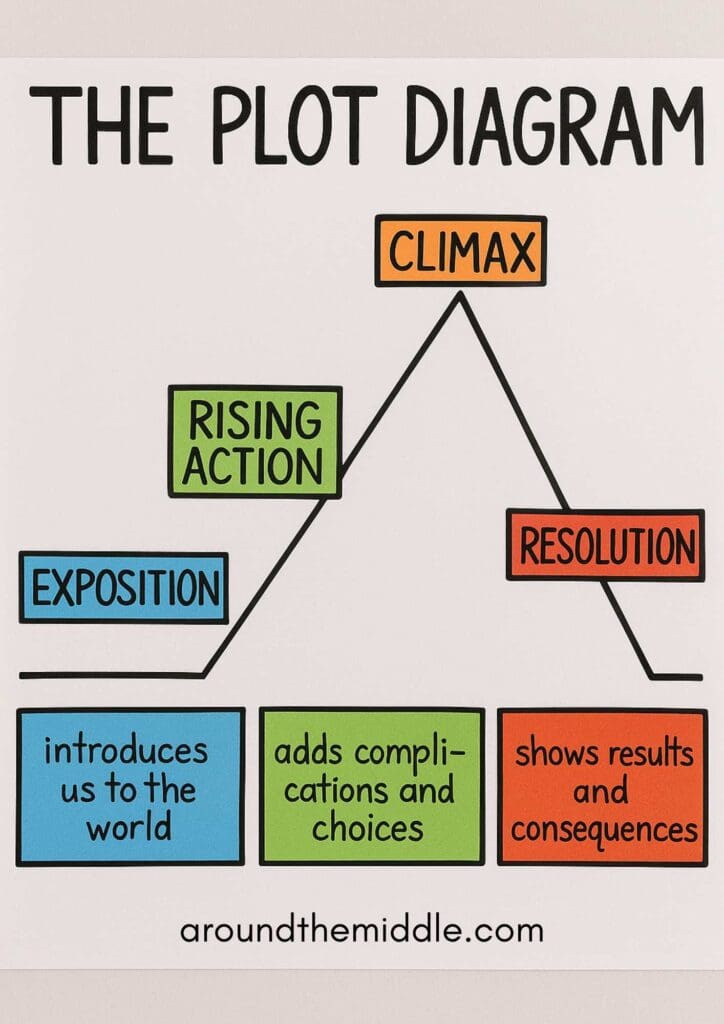
Anchor Chart Example (displayed year-round):
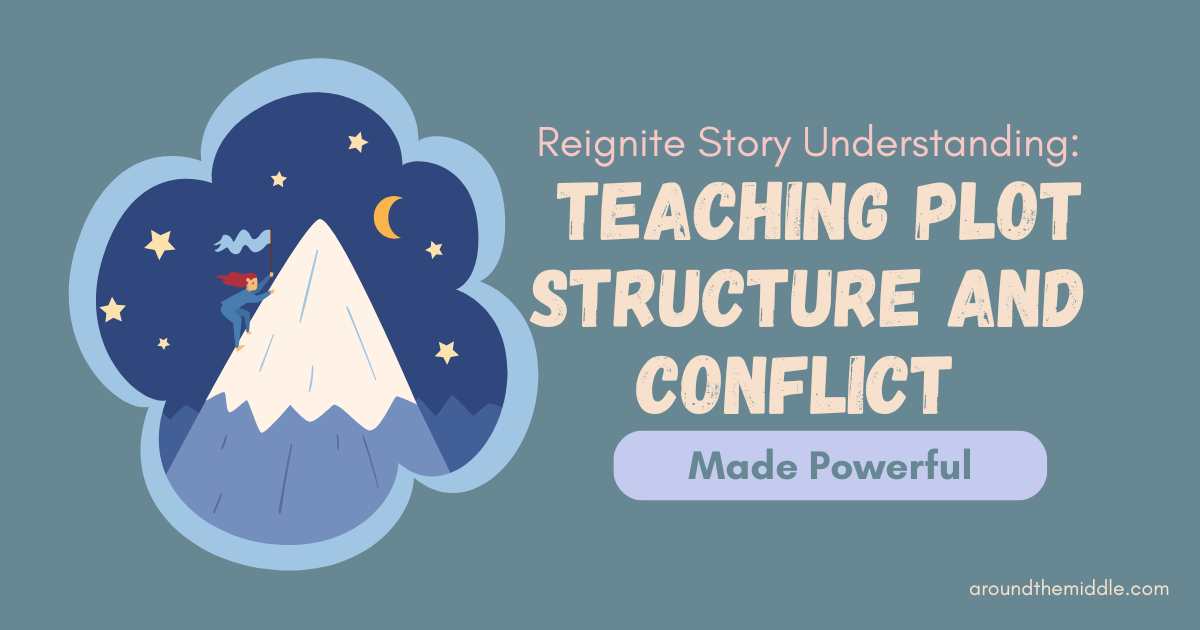
“The Plot Mountain”
- The exposition introduces us to the world.
- The rising action adds complications and choices.
- The climax is the point of highest tension.
- The falling action shows results and consequences.
- The resolution reveals what has changed.
Classroom Routine:
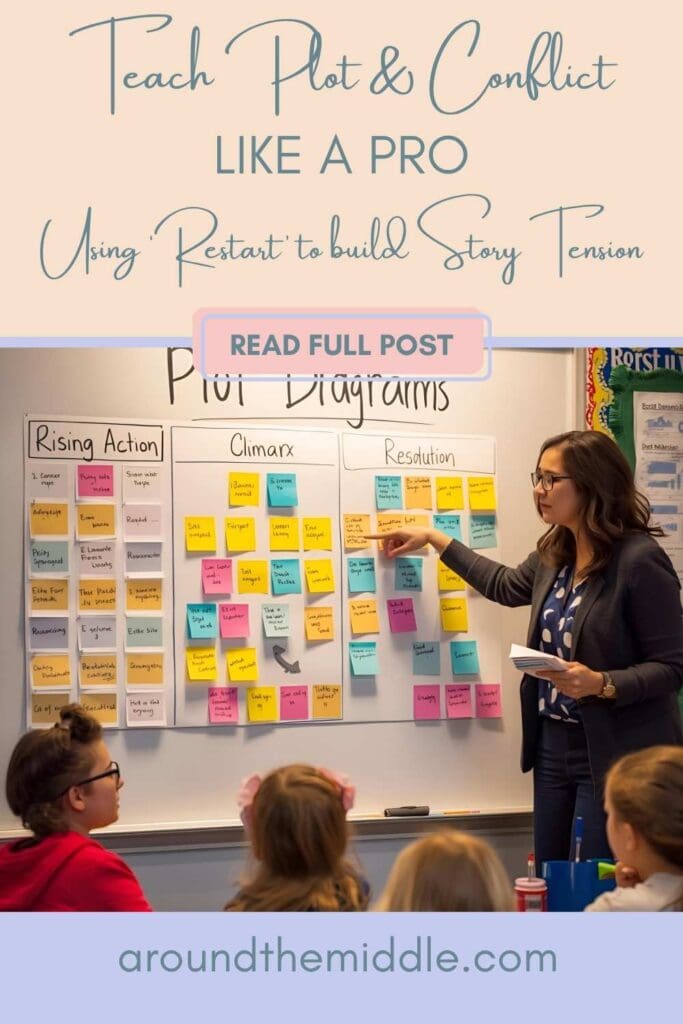
Use a Plot Tracker chart as you read Restart aloud. After each chapter, pause and ask:
- “Which part of the plot mountain are we on now?”
- “What new complication has developed?”
By mid-novel, students will start predicting where the climax will occur — a clear sign they’re internalizing structure.
Free and Low-Prep Novel study Understanding Types of Conflict: Internal vs. External
Teaching the difference between internal and external conflict helps students see that stories operate on two levels — what happens outside the character and what happens within.
Anchor Chart Example:
| Inside Battles (Internal) | Outside Battles (External) |
|---|---|
| Character vs. Self | Character vs. Character |
| Character vs. Society | |
| Character vs. Nature | |
| Character vs. Fate |
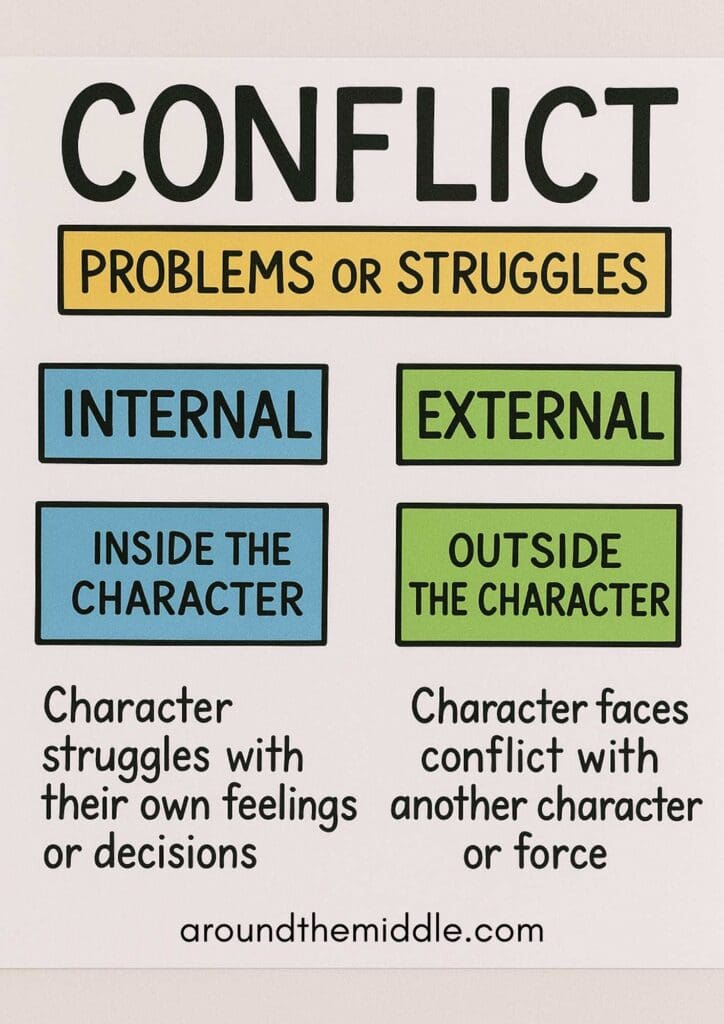
In Restart:
- Internal Conflict: Chase struggles with guilt and identity — is he still the bully he once was, or can he truly change?
- External Conflict: His classmates (particularly Shoshanna and Joel) don’t trust his new behavior, leading to tension that drives the rising action.
Classroom Routine:
Use a Conflict Tracker chart. Divide the whiteboard into “Internal” and “External” and have students add sticky notes throughout the novel whenever they spot a new conflict. This visual map grows with the story and helps students connect events to character growth.
How Tension Builds: Teaching Rising Action and Stakes
Tension is what keeps a reader turning the page — and it’s also what students often miss when summarizing. Teach that tension builds when stakes increase or choices get harder.
Mini-Lesson:
- Revisit early scenes in Restart where Chase tries to rebuild his reputation.
- Have students rate each scene’s tension on a scale of 1–5.
- Discuss: What made the tension rise here? Was it new information, a setback, or a character reaction?
Story Tension Tracker Example:
Display a graph titled “Story Tension Tracker.”
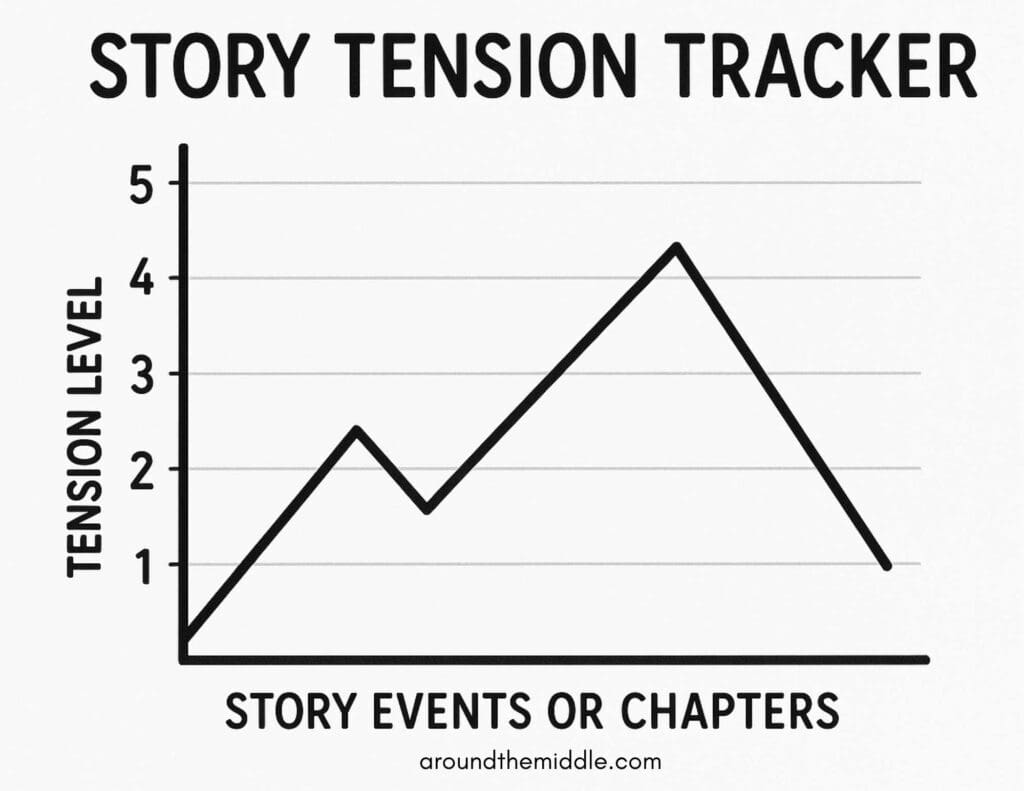
- The x-axis = story events or chapters
- The y-axis = tension level (1–5)
As students track tension over time, they can see the story’s emotional arc visually — a practical and engaging link to the plot diagram.
Routine Extension:
Have students create their own Story Tension Tracker in reading journals. Challenge them to note what causes each rise or drop in tension.
Connecting Plot and Conflict in Restart
By mid-story, Chase’s conflicts overlap. His internal guilt over past actions collides with external judgment from peers, pushing him toward the climax: the discovery of his involvement in Mr. Solway’s theft.
At this point, tension peaks because all conflicts — internal and external — converge. Students can map this directly onto their plot diagrams, labeling key events:
- Exposition: Chase wakes with amnesia.
- Rising Action: He returns to school; old enemies distrust him.
- Climax: The truth about the medal theft is revealed.
- Falling Action: Chase must face consequences and make amends.
- Resolution: Redemption and genuine friendship replace his former reputation.
Having one unified story to refer to helps students see how conflict and plot structure reinforce each other.
From Reading to Writing: Applying Plot and Conflict
Once students can identify how authors build tension, challenge them to apply these strategies to their own narratives.
Writing Routine:
- Brainstorm story ideas that include both an internal and external conflict.
- Use the Plot Mountain to plan the story arc.
- Add checkpoints for how tension will rise — just like the Story Tension Tracker from Restart.
Encourage students to reflect: “What makes readers care about your character’s struggle?”
Final Thoughts on teaching plot structure and conflict: Building Confident Story Analysts
When students understand how conflict fuels the plot, they move beyond retelling — they can explain and interpret. Using Restart as a class model allows them to see that stories aren’t static. They evolve as conflicts collide, choices deepen, and tension builds.
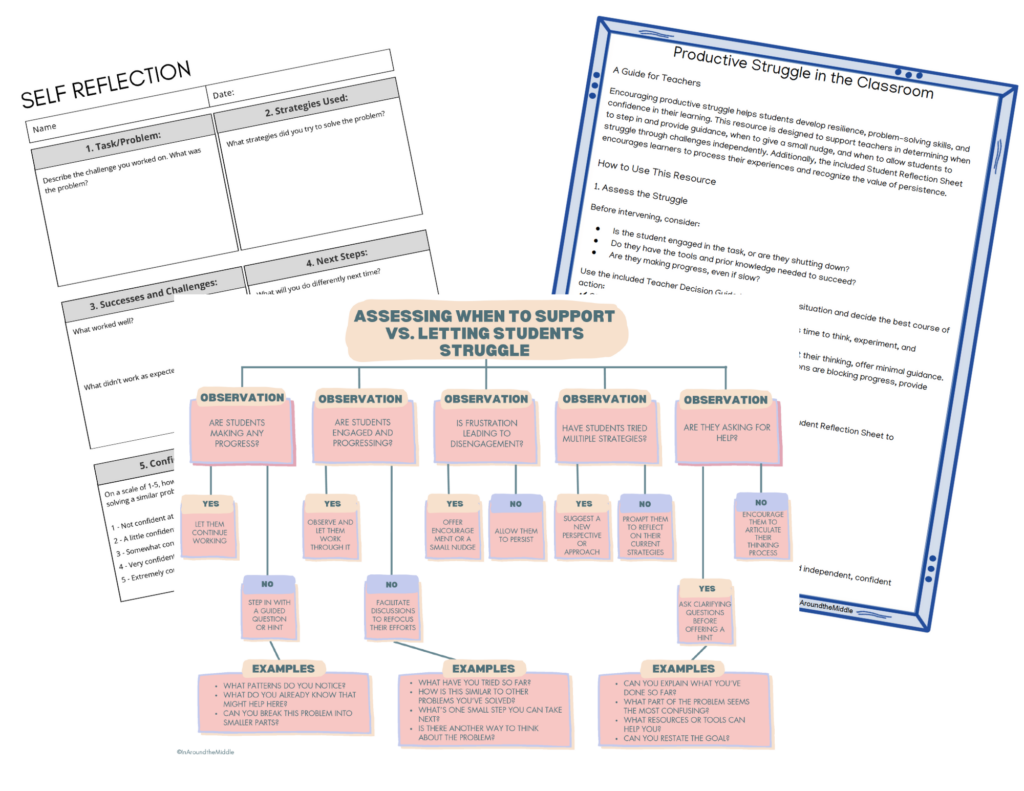
By consistently using anchor charts, trackers, and visual tools, you’ll help your students grasp not only what happens in a story, but why it happens — and that’s where real comprehension begins. And grab a copy of my productive struggle freebie to help you along the way.
Happy teaching!