The Ultimate Guide to Hexagonal Thinking: Transforming Critical Thinking in Middle School ELA

Middle school ELA classrooms often face a common hurdle: students who are reluctant to engage with complex literary analysis because it feels too abstract or overwhelming. Hexagonal Thinking is the pedagogical bridge that turns “scary” critical thinking into a tactile, movement-based puzzle. By shifting the focus from a blank page to a hands-on connection map, this strategy prioritizes “productive struggle” and ensures every student has a seat at the table of high-level discussion.
Why Hexagonal Thinking Works
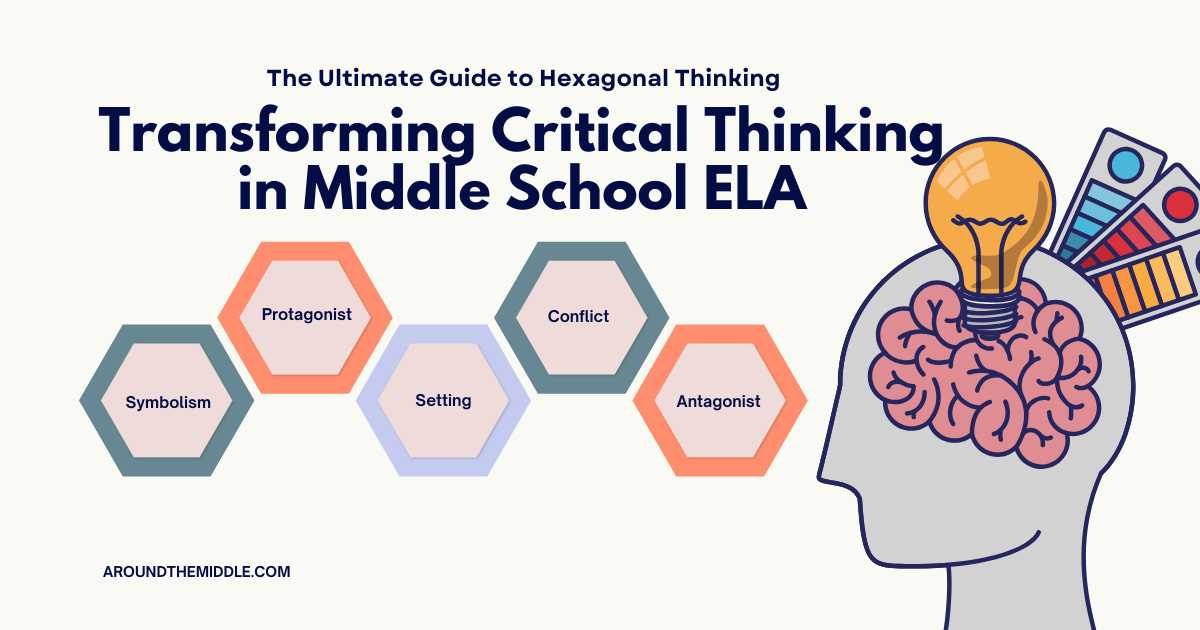
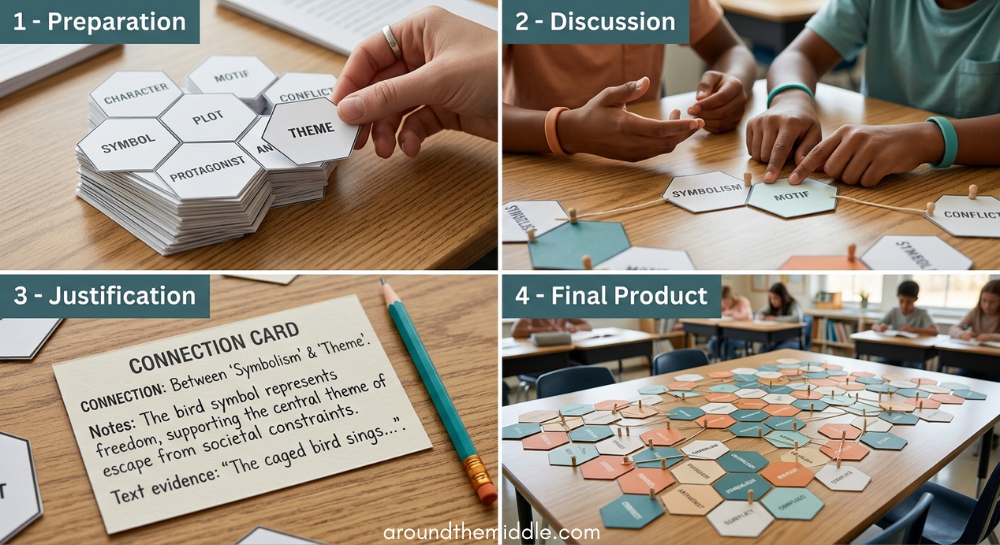
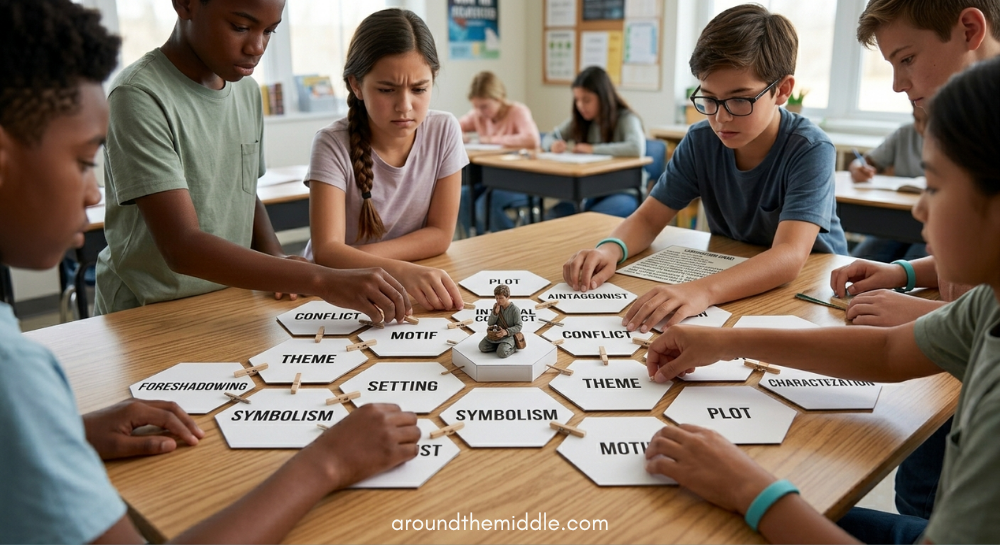
At its core, Hexagonal Thinking is a retrieval and connection-making strategy. Students are given a set of hexagons, each containing a concept, character, quote, or theme. The goal is to arrange these hexagons so that every touching side represents a logical connection.
This isn’t just a matching game; it’s a visual representation of a student’s internal schema. It forces them to justify why two ideas belong together, sparking the kind of “active thinking” that traditional worksheets often fail to produce.
Step 1: Mastering the Logistics (Stress-Free Setup)
The biggest barrier to trying new strategies is often the preparation time. However, setting up a successful session doesn’t have to be a late-night chore. Starting with a versatile, high-utility template allows the focus to remain on the students’ thinking rather than the teacher’s formatting.
Using a simplified approach can eliminate the friction of getting started. For a deep dive into the specific layout that streamlines this process, The One Hexagonal Thinking Template That Changed My Classroom For The Better offers a blueprint for creating a manageable workspace for students.
If the thought of creating individual hexagons for every novel feels daunting, focus on a “universal” setup. The Stress-Free Way to Create a Powerful Hexagonal Thinking Template breaks down how to build a flexible system that can be reused across different genres and units without reinventing the wheel every Monday morning.
Step 2: Elevating the Pedagogy (From Matching to Analysis)
Once students understand the mechanics of touching hexagons, the next stage is pushing them toward “productive struggle.” This is where the real magic happens. The objective is to move beyond obvious pairings (like “Romeo” and “Juliet”) and toward abstract connections (like “Impulsivity” and “Fate”).
A subtle shift in how the activity is framed can lead to a massive leap in student output. By focusing on the justification of the links rather than the links themselves, the rigor of the task increases exponentially. This evolution of the strategy is detailed in How I Made One Simple Change to Dramatically Improve Critical Thinking, which explores the “Connection Card” method to hold students accountable for their logic.
Step 3: Integrating Creativity and Technology
In the modern ELA classroom, merging tactile learning with digital innovation is key to maintaining engagement. One of the most effective ways to ground abstract literary concepts is through character archetypes and motifs.
For a unique twist, try using AI to help generate the “content” that goes inside the hexagons. This allows students to act as curators of information rather than just consumers. The guide to Unlock Fearless Genius: Hexagonal Thinking Action Figure AI Generator demonstrates how to use technology to create “character action figures” that students can physically manipulate and connect within their hexagonal webs. This adds a layer of visual literacy and “realistic” aesthetic that resonates with middle schoolers.

Step 4: Maintaining Engagement During Seasonal Slumps
Hexagonal Thinking is particularly effective during high-energy times of the year—like the lead-up to winter break or the end of a semester—when traditional “sit and get” lessons fail. Because it involves movement and collaboration, it channels that student energy into academic focus.
You can pivot the strategy to fit any seasonal theme, making the classroom feel celebratory without losing the academic edge. Make Memorable Holiday Magic with Hexagonal Thinking Templates shows how to apply this framework to seasonal short stories or year-end reflections, ensuring that the “Active Thinking” philosophy remains consistent from August to June.
Final Thoughts: Building a Cohesive Web
Hexagonal Thinking isn’t just an activity; it’s a framework for building a classroom culture that values process over the “right” answer. When students realize there is no single correct way to arrange their hexagons, they feel empowered to take risks and think critically.
For those looking to fully implement this movement-based strategy, the In Around the Middle TPT Store offers a comprehensive bundle of ready-to-use templates, rubrics, and scavenger hunt variations that get students out of their seats and into the deep end of literary analysis. And don’t forget to grab your free hexagonal thinking assessment download before you go!
Happy Teaching!