Unlock Debate Skills with High-Impact Novel Study Activities

Developing confident, articulate, and thoughtful readers takes more than comprehension questions. Students need structured opportunities to challenge ideas, defend positions, and listen with intention. Debate skills are no longer an optional extra — it is foundational to deeper literacy, critical thinking, and respectful dialogue. Novel studies offer an ideal entry point for this work because literature is full of conflicting motivations, ethical dilemmas, and universal themes that push students beyond surface-level thinking.
Before launching into deep discussion, it helps to ensure students have a strong classroom culture to support the conversations you’re aiming for. The post Back to School Novel Studies That Inspire Powerful Classroom Communities highlights how to build the respectful, collaborative environment needed for meaningful debate. When students feel safe contributing, disagreement becomes a learning tool rather than a social risk.
If you also want to develop students’ resilience and capacity for challenge, you may find my Productive Struggle Freebie useful. It gives you ready-made tools to help students push their thinking and build persistence during reading and discussion tasks. Download it here.

Why Teach Debate Skills in Novel Studies?
Debate is often associated with formal competitions, but in the reading classroom it becomes a practical, everyday strategy to explore ideas and weigh perspectives. Novels are uniquely suited for this work. They contain complex characters, high-stakes choices, ambiguous outcomes, and moral grey areas — all elements that naturally spark disagreement and deep thinking.
Teaching debate skills through your novel study activities strengthens:
- Clear claim-making instead of vague opinions
- Evidence-based reasoning using the text
- Active listening that encourages genuine dialogue
- Respectful challenge, not personal conflict
- Deeper comprehension of theme and author intent
When students debate as part of their reading routine, they begin to see literature as a field of ideas rather than a sequence of events.
What Debate Skills Looks Like in the Reading Classroom
Before students participate in debate, they need clarity around what the skill actually involves. In the context of novel studies, debate skill includes:
- Making a focused, defensible claim
- Backing that claim with well-chosen text evidence
- Explaining how the evidence supports their position
- Responding thoughtfully to counterarguments
- Asking clarifying questions to move thinking forward
- Building on the ideas of peers instead of repeating points
- Maintaining calm, respectful language even in disagreement
Framing debate skill as a series of academic behaviours — not personality traits — ensures that every student can succeed, including those who are quieter, anxious, or less confident speakers.
Debate skills – Why Traditional Discussion Questions Fall Short
Many classrooms rely on predictable comprehension questions that ask students to recall information, identify a theme, or describe a character’s choices. While these questions have their place, they rarely push students to think critically or engage with the text at a deeper level.
Traditional questions often lead to:
- surface-level responses
- teacher-driven conversation
- minimal peer interaction
- one “correct” answer
- little room for interpretation
Debatable questions, by contrast, create a space where multiple perspectives can be valid and where students must justify their thinking rather than guess what the teacher wants to hear.
How to Turn Thematic Questions into Debates
Transforming your thematic questions into debate prompts is one of the simplest ways to elevate the quality of your novel study activities.
1. Start with a Universal Theme
Themes such as courage, responsibility, justice, power, friendship, identity, or fairness lend themselves well to debate because they connect directly to lived experience.
2. Rewrite the Theme as a Debatable Claim
Instead of asking:
“What is the theme of responsibility in this novel?”
Try:
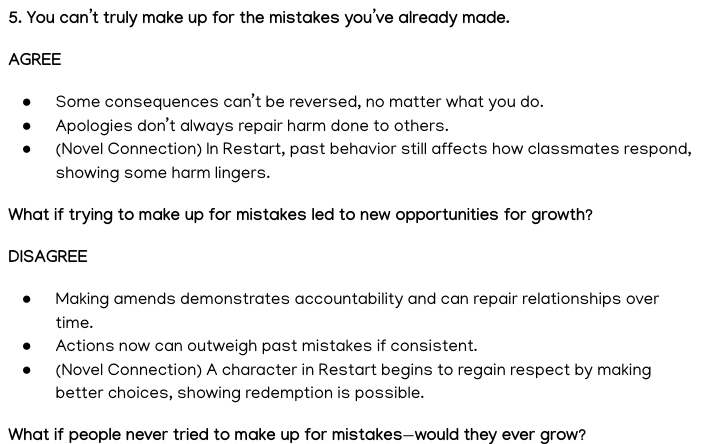
“People only learn responsibility when they face consequences.”
This structure forces students to take a stand on an idea rather than summarising events.
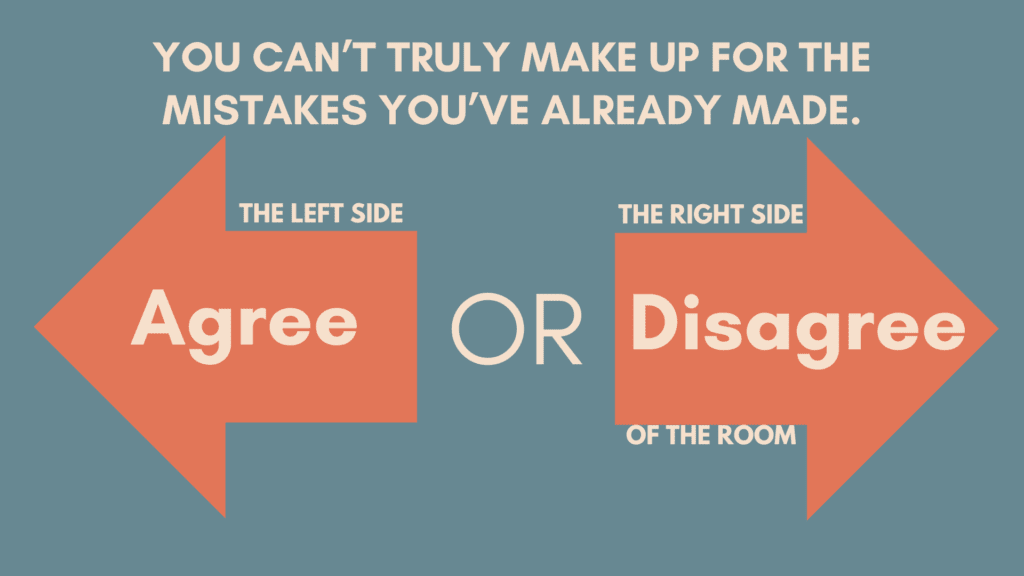
3. Have Students Choose a Side
Beginning with an agree/disagree stance builds confidence and ensures every student enters the discussion with a clear perspective.
4. Require Text Evidence
Students must support their position using the novel. This promotes discipline and pushes them to move beyond personal opinion.
5. Keep the Conversation on Ideas, Not Characters
Characters provide evidence, but the discussion should return to the universal idea. This helps students transfer insights to future texts and real-life situations.
If you want ready-made prompts that follow this structure, my Debatable Topics resources streamline the process and integrate easily into any novel unit.
Using Socratic Seminars as Novel Study Activities
Socratic seminars sit at the intersection of discussion, debate skill, and active reading. When paired with strong thematic questions, they produce rigorous, student-led thinking that outperforms traditional Q&A.
Choosing the Right Questions
Effective Socratic seminar prompts are:
- open-ended
- interpretive
- grounded in theme
- rich enough to sustain conversation
- without a single correct answer
Creating Accessible Participation
To support all learners:
- model expectations
- provide sentence stems for challenge and clarification
- build routines around turn-taking
- normalise pauses for thinking time
Encouraging Evidence-Based Thinking
Show students how to reference the text concisely and explain the significance of their evidence, not just quote it.
Keeping the Seminar Student-Led
Your role is to guide lightly. Students should ask the follow-up questions, build on peer thinking, and shape the direction of inquiry.
High-Impact Novel Study Activities That Build Debate Skills
You don’t need large-scale debates to build strong discussion habits. Small, consistent routines are equally powerful. Consider adding:
- Mini agree/disagree warm-ups before reading
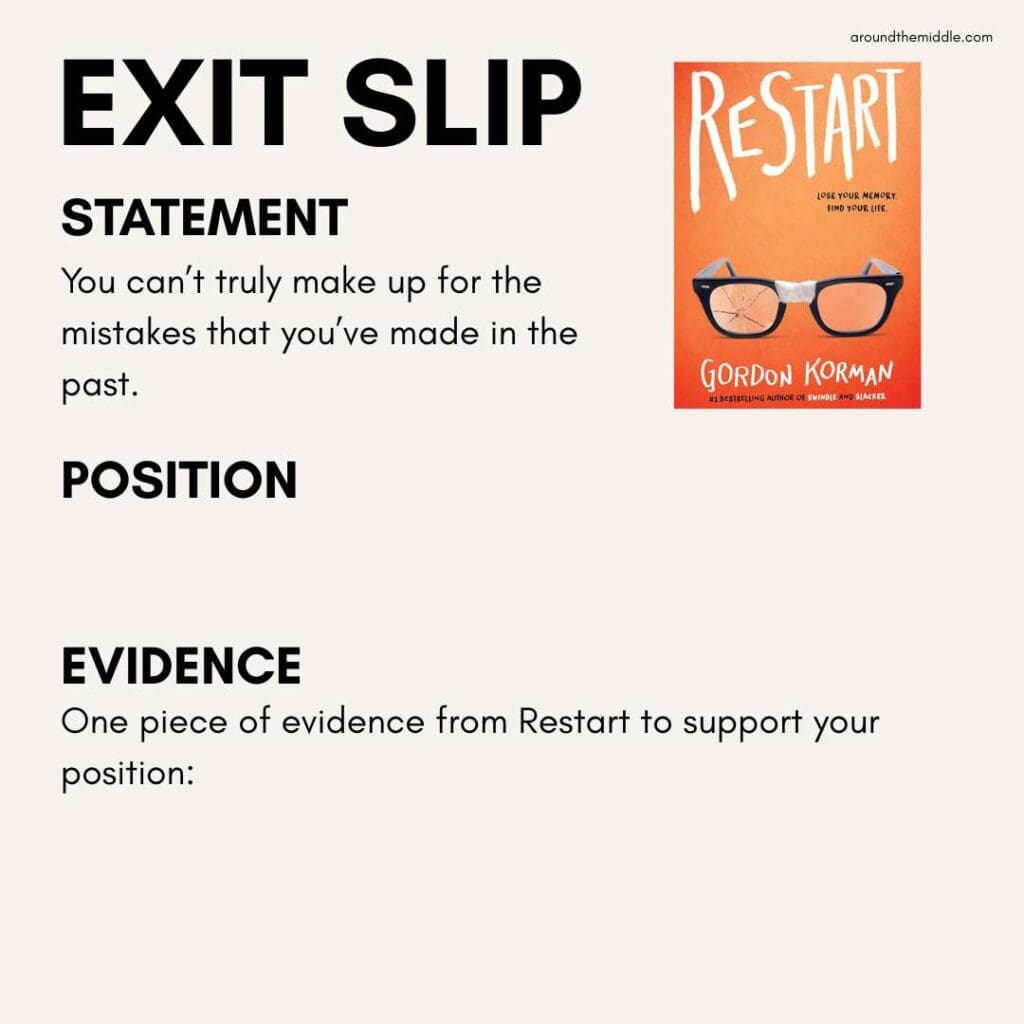
- Exit slips requiring a claim + evidence
- Discussion task cards focused on theme
- Paired micro-debates during or after chapters
- Pre-reading debates using universal claims
- Short, structured whole-class discussions with rotating roles
- Higher-order thinking questions that challenge assumptions
These activities integrate seamlessly into existing lessons and encourage students to read with purpose.
Your debatable-topics sets fit naturally here, providing ready-to-use statements that elevate thinking without adding extra planning time.
Practical Tips for Implementation Debate Skills in your Novel Study Activities
To make debate an ongoing component of your novel studies:
- Begin with quick, low-stakes routines
- Rotate debate roles to build different aspects of the skill
- Teach explicit stems for agreement and challenge
- Reinforce that changing one’s mind demonstrates growth
- Praise reasoning quality, not volume or confidence
- Cultivate a culture where curiosity is valued over correctness
These small instructional habits quickly create a classroom where students willingly engage in thoughtful, well-supported discussion.
Final Thoughts on teaching debate skills
Embedding debate skills into your novel study activities transforms reading lessons from information retrieval into genuine intellectual engagement. Students learn to evaluate ideas, justify interpretations, and participate in discussion with maturity and confidence. Novels provide them with a safe space to practise these skills while exploring issues that resonate with real life.
Start small: introduce a single debatable statement tomorrow. Ask students to take a position. Invite them to support it. You’ll see an immediate improvement in the depth and quality of classroom conversation.
When you’re ready to extend this work with structured prompts and ready-made resources, you’ll find tools that align seamlessly with this approach — designed to strengthen thinking while saving you time.
Happy teaching!