Unlock Emotional Depth: Creative Approaches to Teaching Setting and Mood
When students can tell you what happened in a story but not where or how it felt, you’ve got a gap in understanding. Teaching setting and mood bridges that gap. It helps students move from surface-level comprehension to deeper literary thinking—where they start to see how an author’s choices shape emotion, theme, and character decisions.
When we slow down and guide students to feel the world of a story—the sounds, colors, and atmosphere—we give them tools to interpret meaning on their own. They begin noticing how a shadowed alley feels different from a sunlit garden, and how that contrast hints at conflict, tone, and theme. Teaching setting and mood isn’t just about description—it’s about building readers who think like writers.

Why Teaching Setting and Mood Matters
Setting isn’t just a backdrop—it’s a powerful force that influences tone, mood, and meaning. When students understand how setting creates atmosphere, they begin to interpret not only what happens but why it matters.
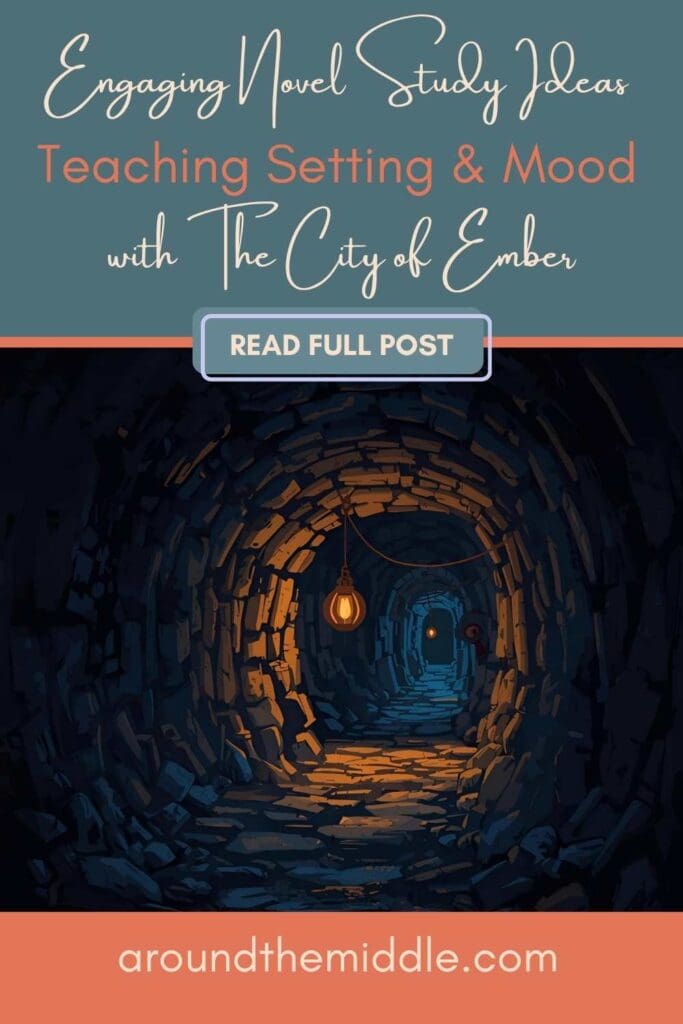
In The City of Ember, for example, the underground world’s dim light and artificial surroundings aren’t just descriptive details. They establish a mood of uncertainty and decay, mirroring the city’s failing systems and the characters’ growing desperation. This connection between setting and mood drives both the tone of the novel and the choices its characters make.
Teaching setting and mood gives students the tools to analyze those layers with confidence.
The Power of Setting in Storytelling
To teach setting effectively, help students look beyond “where and when.” A strong literary setting reveals culture, conflict, and possibility.
In The City of Ember, the underground city defines every part of life: limited resources, strict rules, and a society built on fear of the unknown. When Lina and Doon discover fragments of a plan leading to another world, the setting itself becomes a barrier and a motivator.
Classroom strategy:
Have students change the setting of The City of Ember to a modern city above ground. How would the plot shift? Would the tone still feel urgent and oppressive—or would it change to curiosity and adventure? This simple change shows how setting influences both the story’s direction and its emotional pull.
Understanding Mood and Tone Through Setting
Mood is the feeling readers experience; tone is the author’s attitude toward the subject. Both are shaped heavily by setting.
In The City of Ember, the flickering lights, echoing tunnels, and faint hum of machinery create a mood of tension and fragility. The tone—somber yet hopeful—emerges from how the author describes these details.
Teaching Tip:
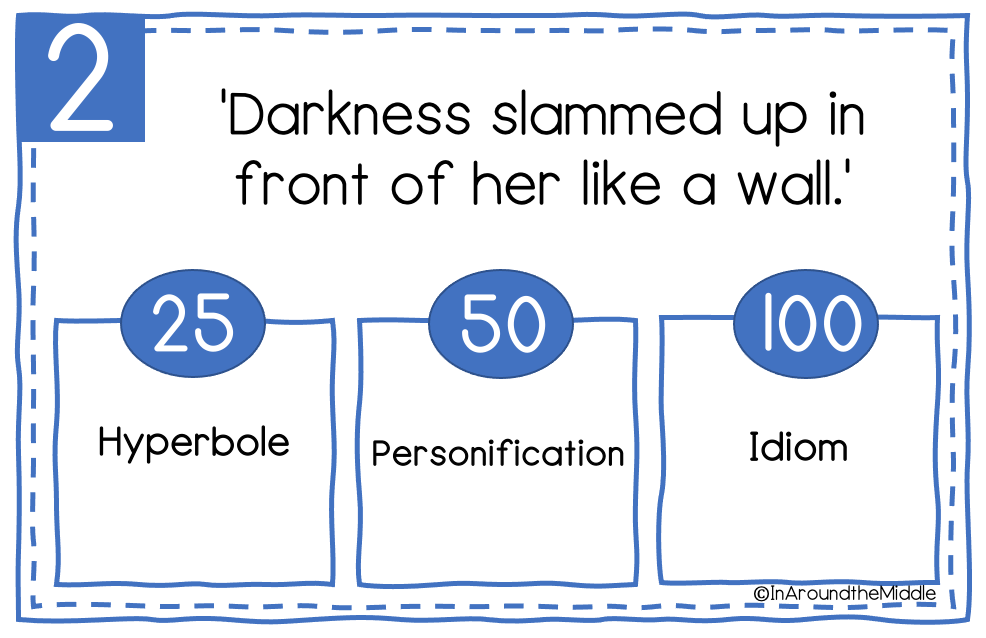
Ask students to highlight sensory and emotional words in a passage. Then have them label whether those words contribute to mood (reader’s emotional response) or tone (author’s stance).
Look at the types of figurative language used by the author to enhance both the setting and mood.
To solidify understanding, compare scenes with contrasting moods—like the oppressive city streets versus the awe of discovering natural light.
Using Sensory Language for Teaching Setting and Mood
One of the most effective ways to teach setting and mood is through sensory detail. Encourage students to write and visualize scenes using the five senses—sight, sound, smell, touch, and taste.
Activities for Teaching Sensory Details:
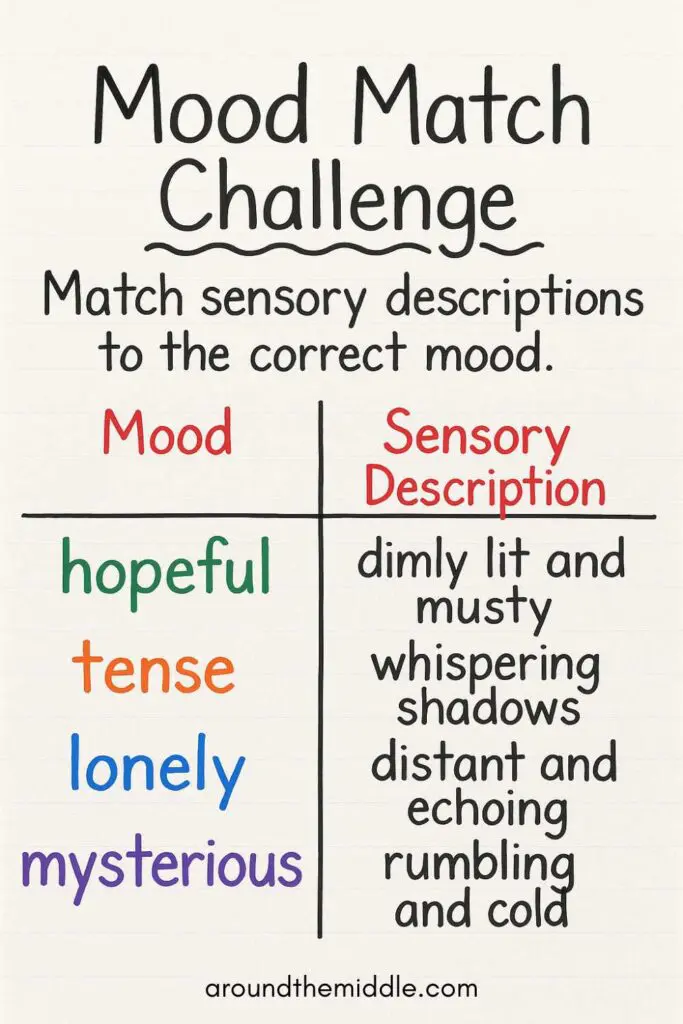
- Sensory Brainstorm Wall: Post color-coded sticky notes for each sense and have students add setting-based words from The City of Ember (e.g., dim, metallic, musty, echoing).
- Mood Match Challenge: Write mood words like hopeful, tense, lonely, and mysterious. Students match sensory descriptions to the correct mood.
- Rewrite It: Provide a plain setting description (“The hallway was long.”) and challenge students to rewrite it using sensory detail to evoke a mood (“The hallway stretched endlessly, humming with the buzz of dying lights.”).
These activities help students link descriptive writing with emotional impact.
Visual Setting Analysis Activities
Visual literacy is a natural bridge to understanding setting and mood. Images, film clips, and book illustrations can anchor abstract concepts in something students can see.
Ideas for Visual Setting Analysis:
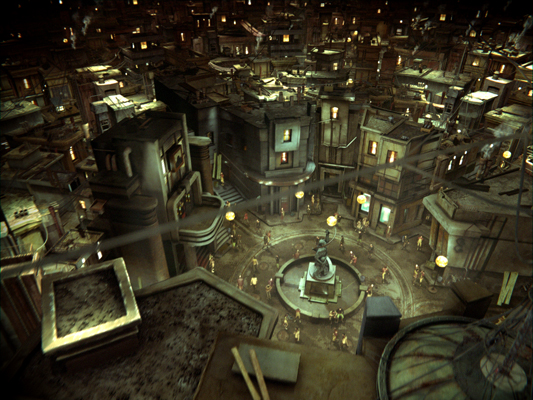
- Image Annotation: Use stills from The City of Ember movie adaptation. Ask students to label lighting, color, and spatial layout. Discuss how these visual choices build mood.
- Setting-Mood-Tone Chart: Create a three-column organizer where students connect elements of setting (e.g., “dark tunnels”) to mood (“claustrophobic”) and tone (“oppressive but determined”).
- Digital Slides Activity: Have students use Google Slides to layer images, key words, and color palettes that match the mood of key scenes.
Visuals help students internalize how setting shapes tone and theme—especially for visual and EAL learners.
Connecting Setting, Character Decisions, and Theme
When students can link setting to why characters act, they begin to interpret theme.
In The City of Ember, the dark, confined setting influences every decision Lina and Doon make. Their longing for escape and discovery isn’t random—it’s a reaction to the setting’s limitations. When they finally reach the surface, the shift in light and openness reflects the novel’s central theme of hope and renewal.
Classroom Prompts:
- How might the story change if Lina lived in a bright, thriving city?
- What do the city’s failing lights symbolize about the society’s values?
- Does the setting support or challenge the characters’ choices?
Encourage students to track these setting-to-theme links as they read.
Practical Classroom Takeaways
- Teach setting and mood together, not separately. Students learn faster when they see how one affects the other.
- Use sensory and visual tools to make mood concrete.
- Revisit setting each time tone or theme shifts in a text.
- Encourage students to revise their own writing using setting cues to build emotional depth.
If you teach The City of Ember or any novel with a strong sense of place, these techniques will sharpen your students’ literary thinking and elevate their written responses.
Final Thoughts: Building Immersive Readers and Writers teaching setting and mood
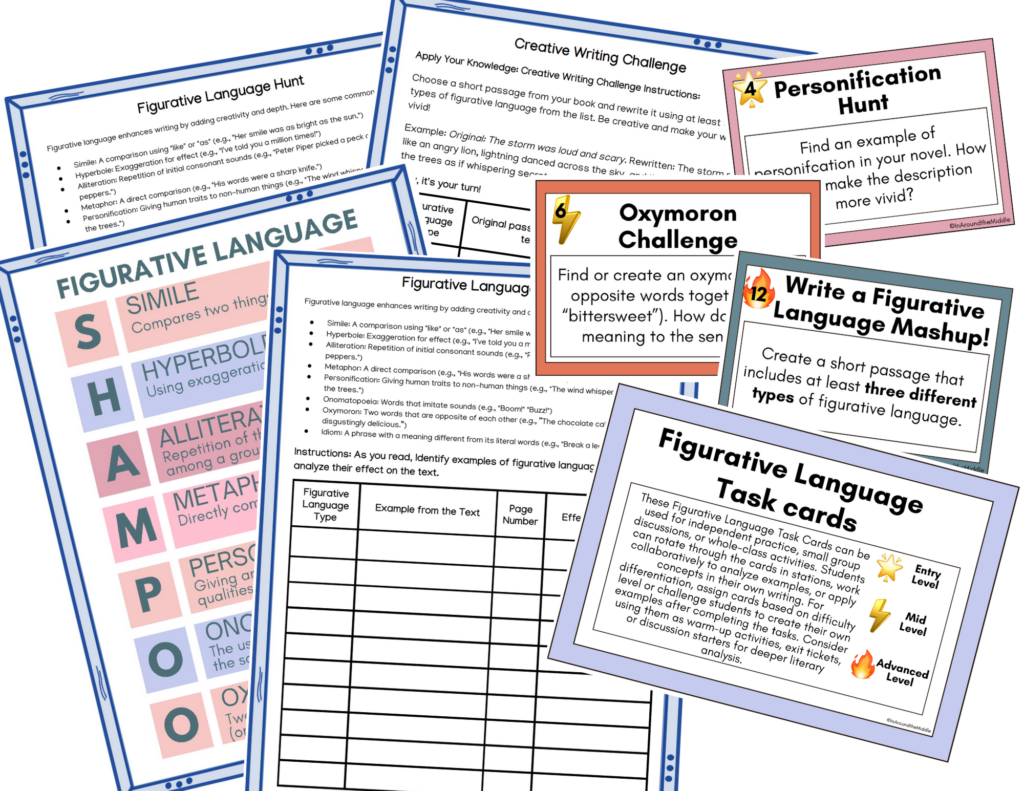
When students grasp how setting shapes mood, tone, and theme, they stop reading stories as flat events and start experiencing them as living worlds. Teaching setting and mood builds readers who pay attention—to detail, to emotion, and to meaning.
Try one of the sensory or visual activities in your next novel study and watch your students’ engagement grow.
And if you’re ready to take this further, explore my related posts on Teaching Theme and Teaching Character Analysis for more classroom strategies that connect beautifully with your literature units.
Happy teaching!