A Simple System for Powerful Socratic Seminars in Novel Studies
Running Powerful Socratic Seminars During a Novel Study (and Assessing Them Fairly)

A Socratic Seminar is where a novel study moves from reading comprehension to real thinking. This is the lesson where students analyse themes, question character decisions, and engage with ideas rather than hunt for the “right answer.”
If you’ve already laid the groundwork—building expectations and teaching discussion skills—this stage is about execution. A well-run Socratic Seminar becomes a repeatable routine that strengthens comprehension, speaking, and analytical writing across an entire novel study.
If you’re still setting foundations, revisit
👉 Post 1: Running Socratic Seminars in Novel Studies without the Choas
👉 Post 2: Preparing Students for a Successful Socratic Seminar with Confidence

What a Strong Socratic Seminar Lesson Looks Like in a Novel Study
An effective Socratic Seminar follows a clear before–during–after structure.
Before the Socratic Seminar, students complete a short preparation task tied directly to the novel—annotated passages, written responses, or text-based questions. This ensures every student arrives with evidence and ideas.
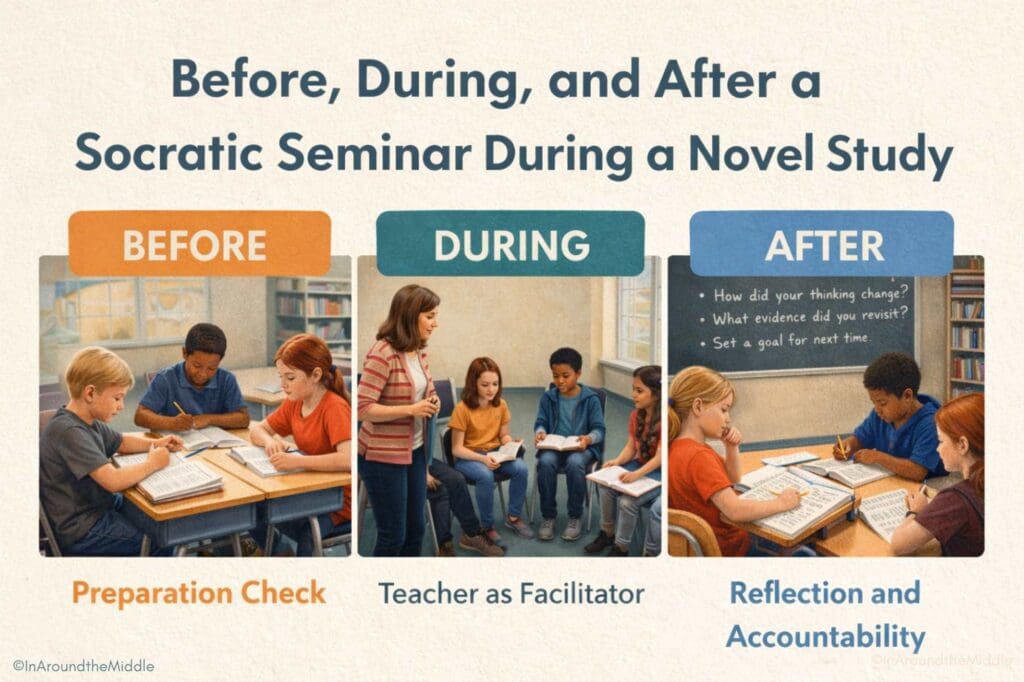
During the Socratic Seminar, the teacher acts as facilitator, not discussion leader. Students respond to one another, reference the novel, and extend ideas independently. The discussion belongs to them.
After the Socratic Seminar, reflection and accountability lock in learning. Students evaluate their participation, revisit key ideas, and connect discussion points back to the novel study.
Crafting Strong Socratic Seminar Questions for Any Novel Study
Strong questions are the backbone of every successful Socratic Seminar.
Discussion killers—questions with one correct answer or basic recall—shut conversations down. Instead, effective Socratic Seminar questions are:
- Theme-based: What does the novel suggest about power, loyalty, or justice?
- Character-driven: Was this character justified in their decision?
- Ethical: Should this outcome be considered fair?
These question types work across any novel study and encourage sustained, meaningful discussion rather than surface-level talk.
The Teacher’s Role During a Socratic Seminar
During a Socratic Seminar, restraint matters.
Intervene only when the discussion stalls or drifts far from the novel. Redirection should be subtle:
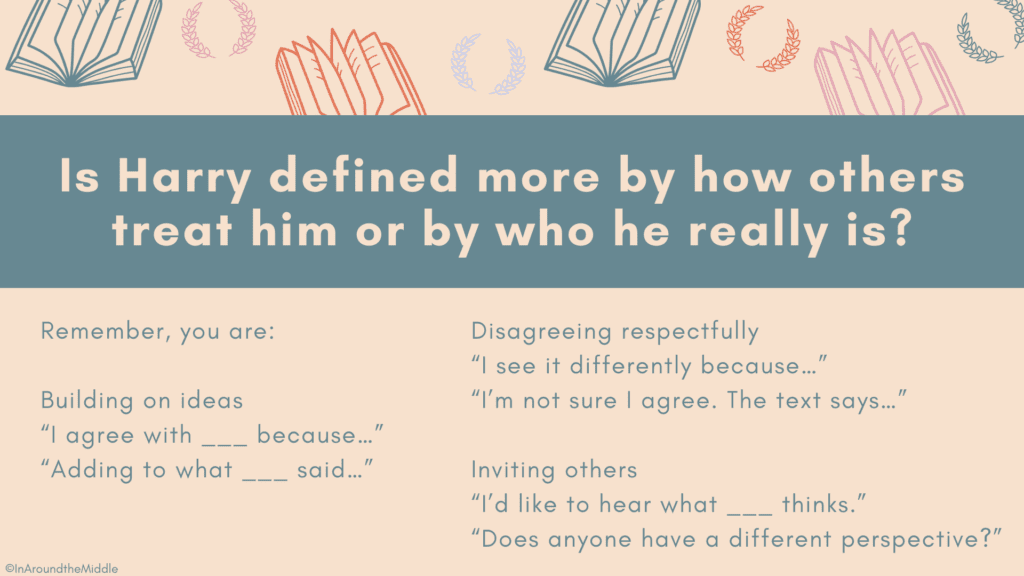
“Where do we see that in the text?” or “Who can challenge or build on that idea?”
Participation can be tracked discreetly using a simple checklist or observation notes. This keeps assessment fair without disrupting discussion flow.
Assessing Socratic Seminars Without Killing Discussion
Assessment is where many teachers lose confidence with Socratic Seminars in a novel study.
Early seminars benefit from formative assessment—observations, reflections, and goal setting. When summative assessment is needed, rubrics should reward:
- Use of textual evidence
- Quality of thinking
- Active listening and responding
Speaking the most should never equal the highest score.
Structured self-assessment and peer assessment also help students take ownership of their discussion skills.
Reflection That Strengthens the Novel Study

Reflection turns a Socratic Seminar into a learning tool rather than a one-off activity. It gets them thinking about what was discussed, what worked well, and what they learned. It also sends the message that you will be doing this again and some thinking time will help them transfer these developing skills to other areas as well.
Effective reflection asks students to consider how their thinking evolved, what ideas challenged them, and how discussion insights connect to the novel. These reflections naturally feed into analytical writing, theme essays, and follow-up lessons within the novel study.
Making Socratic Seminars a Repeatable Novel Study Routine
Socratic Seminars work best when they’re routine, not rare. Build it into your weekly lesson plan (at least for the first while). Students need to practice this regularly to build and become confident in these new skills.
Running a Socratic Seminar at key moments in a novel study—after major plot shifts or before assessment tasks—builds confidence and discussion stamina. Rotating formats keeps students engaged while maintaining clear expectations.
Over time, students become more independent, more analytical, and more willing to take intellectual risks.
Support for Teachers: Free and Ready-Made Resources
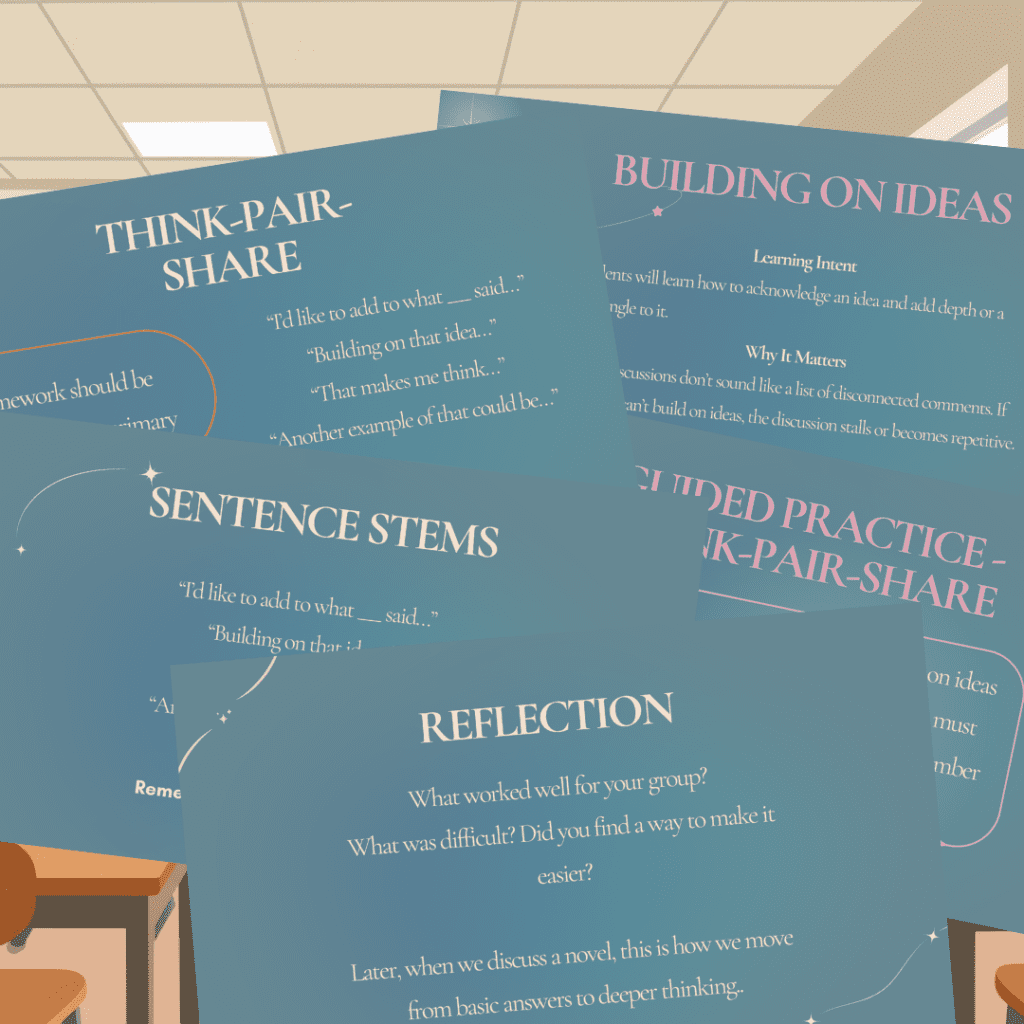
If your students need explicit instruction before their first seminar, start with my Free Socratic Seminar Bootcamp PowerPoint. It walks students through discussion norms, accountable talk, and evidence-based responses step by step.
If you want to save planning time, you can also explore my ready-made, novel-specific Socratic Seminar resources in my Teachers Pay Teachers store. These include pre-written seminar questions, student prep sheets, and assessment tools designed to slot directly into your novel study.
Final Thoughts
Your first Socratic Seminar won’t be perfect—and it doesn’t need to be. Each seminar builds confidence, skills, and depth of thinking.
With clear structures, strong questions, and fair assessment, Socratic Seminars become one of the most powerful—and manageable—parts of any novel study.
Happy teaching!