Movement Based Learning Ideas Students Love
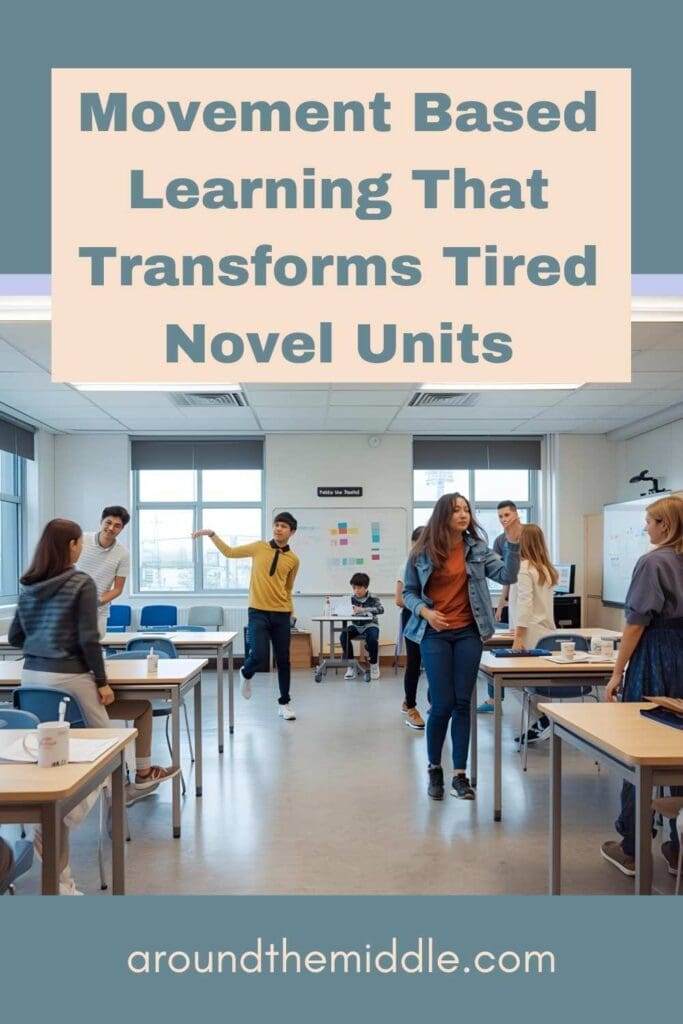
Movement based learning is no longer a “nice-to-have” add-on in the classroom — it’s a practical, research-supported way to improve engagement, comprehension, and retention. Yet when it comes to novel studies, many teachers default to static routines: read, write, discuss, repeat.
The issue isn’t the content. It’s the delivery.
The good news is that you don’t need to scrap your novel unit or redesign your curriculum. With intentional shifts, the same learning goals can be taught through purposeful movement — without sacrificing rigour or classroom control.
This post breaks down practical movement examples you can use before, during, and after reading any novel, along with ready-made resources that save time and free alternatives you can implement immediately.
What Movement Based Learning Looks Like in a Novel Unit
Movement based learning is not about noise, chaos, or off-task behaviour. In a strong novel unit, movement is:
- Purposeful and tied directly to comprehension
- Structured with clear expectations
- Designed to make thinking visible
Students aren’t just moving — they are reading closely, discussing ideas, defending opinions, and revisiting evidence.
Before Reading: Use Movement to Build Background Knowledge
Traditional approach
Teacher explanation, note-taking, or a background worksheet.
Movement based learning upgrade
A Pre-Reading Scavenger Hunt that introduces key concepts before students open the book.
Students move around the classroom (or school) to locate clues related to:
- Setting
- Historical or cultural context
- Big themes
- Key vocabulary
This approach ensures every student enters the novel with shared background knowledge — a critical factor in comprehension.

Why this works
- Curiosity is activated immediately
- Struggling readers gain confidence early
- Passive listening is replaced with active thinking
Classroom-ready option
Use a Pre-Reading Scavenger Hunt designed specifically for novel studies.
Free movement example
- Post 6–8 images, short texts, or facts around the room. Students rotate, record observations, and predict how each clue might connect to the story.
- Provide short passages with background information on the historical or cultural context of the novel with questions at the bottom like the example below.
During Reading: Make Figurative Language Physical
Traditional approach
Underline examples and answer questions in a workbook.
Movement based learning upgrade
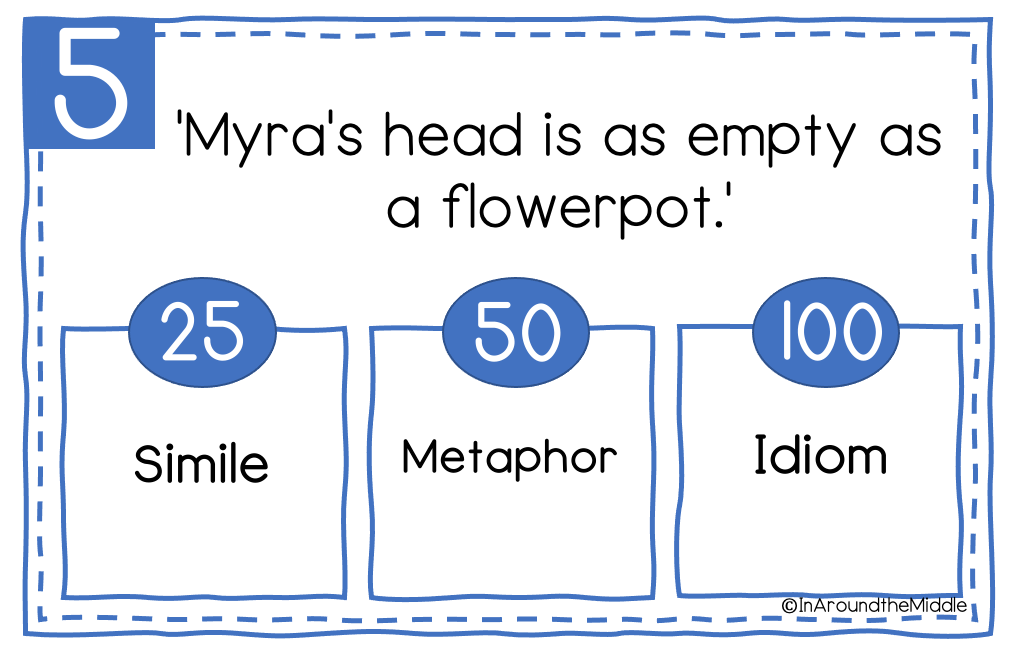
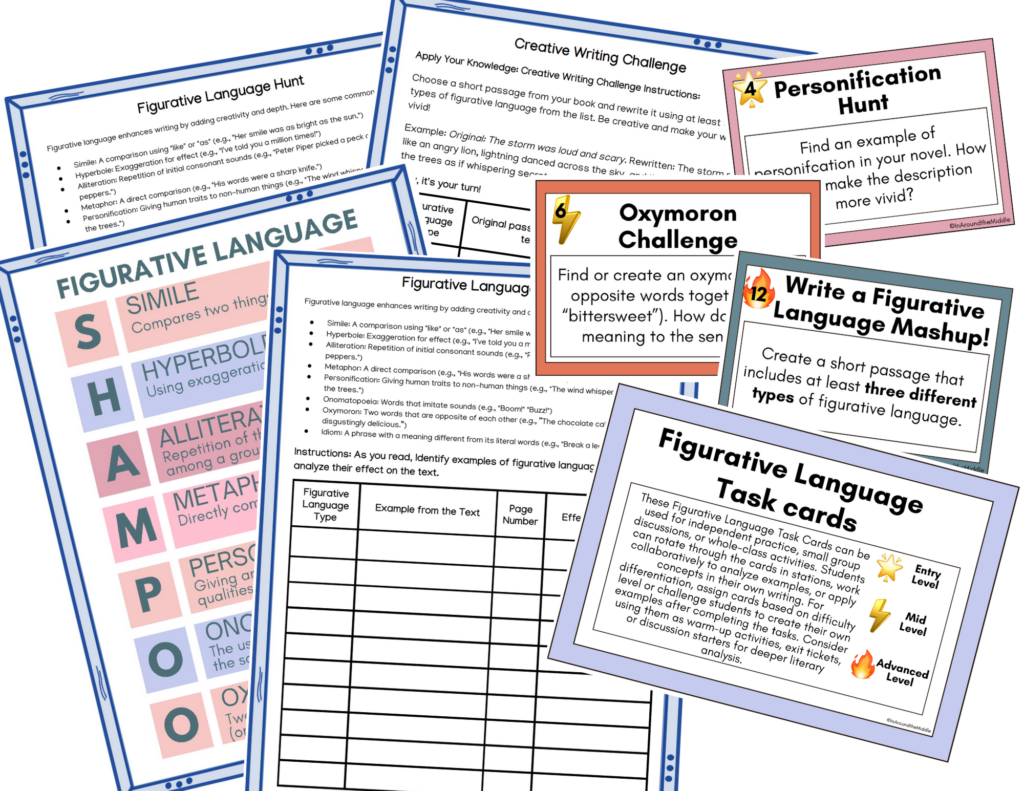
A Figurative Language Scavenger Hunt tied directly to the novel.
Students physically move to locate examples of:
- Similes
- Metaphors
- Personification
- Imagery
Each stop requires them to explain meaning and connect language choices to mood, character, or theme.
Why this works
- Abstract language becomes concrete
- Students reread key passages with purpose
- Discussion becomes unavoidable — in a good way
Classroom-ready option
Use a novel-specific figurative language scavenger hunt to target exact examples from the text. Try this free figurative language activity to get students started in collecting examples from the text.
Free movement example
Tape figurative language excerpts on walls. Students rotate, label the device, and justify its effect on the reader before moving on.
After Reading: Review Through Challenge, Not Worksheets
Traditional approach
Comprehension questions or chapter summaries.
Movement-based upgrade
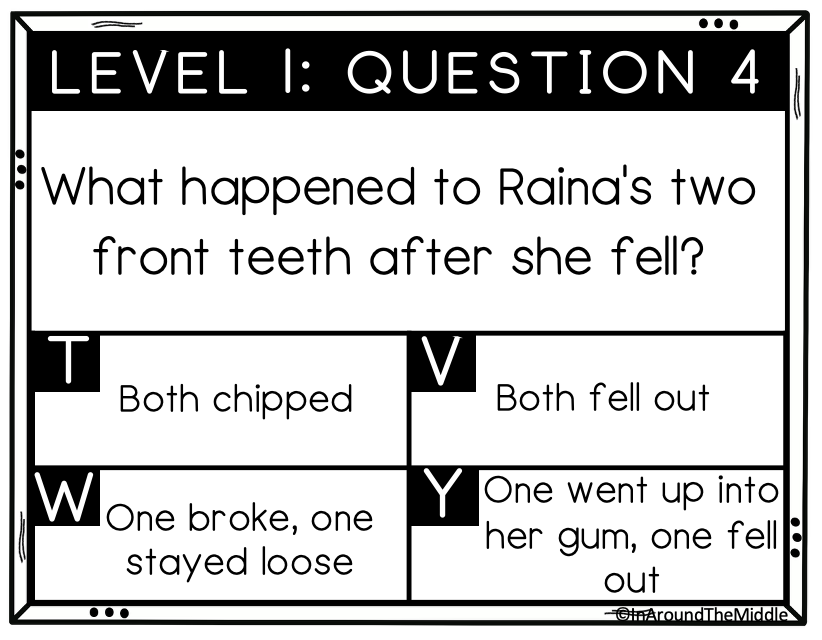
A Novel Review Escape Room.
Students work in teams to solve puzzles connected to:
- Plot sequencing
- Character motivation
- Theme development
- Cause and effect
To progress, they must move between stations and apply what they know — not just recall facts. Puzzles to break add a fun and competitive nature to the task as well. The best part? Students naturally begin to work together to solve the final code!
Why this works
- Review feels purposeful, not repetitive
- Students revisit key ideas without disengaging
- Collaboration is focused and structured
Classroom-ready option
Use a Novel Review Escape Room to reinforce comprehension through problem-solving.
Free movement example
Create four “locks” on the board. Each lock opens with a correct response found at different stations around the room. The digit from each lock combine for the final four-digit code!
Movement based learning Through Thinking: Debate as an Active Strategy
Traditional approach
Written responses or whole-class discussion dominated by a few voices.
Movement-based upgrade
Pre- and Post-Novel Study Debates.
Students physically move to positions such as:
- Agree / Disagree
- Strongly Agree / Unsure / Strongly Disagree
They must defend their stance using evidence from the text and are encouraged to move again if their thinking changes.
Why this works
- Thinking becomes visible
- Students must justify opinions with evidence
- Engagement remains high, even for reluctant speakers
Classroom-ready option
Use structured novel debates that target theme, conflict, and character growth. This can be done before even beginning the novel, then revisited during and after to see if students change their viewpoint!
Free movement example
Mark positions on the floor with tape or simply have students move to one side of the room to agree, and the other to disagree. Read a statement aloud and require students to move — and they need to be ready to justify their opinion.
Managing Movement Without Losing Control
Teachers often avoid movement based learning because of classroom management concerns. Structure solves this.
- Set expectations explicitly
- Use timers for rotations
- Assign roles within groups
- End each activity with written accountability
When movement has purpose, behaviour improves rather than deteriorates.
A Sample Movement-Driven Novel Lesson
- Pre-reading scavenger hunt to build context
- Figurative language movement task mid-novel
- Debate checkpoint to assess evolving thinking
- Escape room review after finishing the text
- Written reflection or assessment
This is not novelty teaching — it’s a sustainable system.
Final Thoughts on Movement based learning in novel study
Movement based learning is not about doing more. It’s about delivering learning better. Looking for more movement based learning strategies that actually work? Check out my post on movement activities and classroom culture.
Novel units don’t need replacing. They need re-imagining.
Start with one movement shift. Build from there. Your students — and your classroom culture — will reflect the difference. And don’t forget to grab your figurative language freebie to get students started on finding those key examples in your next novel study!
Happy teaching!