Teaching Point of View and Perspective: Helping Students See Through New Eyes

Understanding who tells a story and how they see it changes everything. Teaching point of view and perspective is more than identifying pronouns—it’s about helping students recognise bias, tone, and author intent. Once students can see that stories shift depending on who holds the pen, their comprehension and empathy deepen dramatically.
This post explores practical ways to teach first-person and third-person narration, guide students in exploring multiple perspectives, and use rewriting exercises that reveal how point of view shapes meaning.
Point of View vs. Perspective: Clearing Up the Confusion
When teaching point of view and perspective, start by defining each clearly:
- Point of View is who is telling the story — first person (“I”), second person (“you”), or third person (“he/she/they”).
- Perspective is how that narrator interprets events — their feelings, biases, experiences, and worldview.
For example, in Wonder by R.J. Palacio, readers first see events through Auggie’s first-person narration. Later, other characters take over, and the story shifts. The same events feel different because the perspective changes — even though the topic (Auggie’s experience at school) stays the same. This layered approach helps students understand that point of view is grammatical, while perspective is emotional and interpretive. As students become more confident in analysing perspective, they can begin connecting these insights to how a text develops its central themes.
Teaching Point of View and Perspective; Strategies That Stick
Rewriting a Scene from a different point of view
One of the most effective ways of teaching point of view and perspective is to have students rewrite a short scene from another narrator’s position.
Step-by-step example:
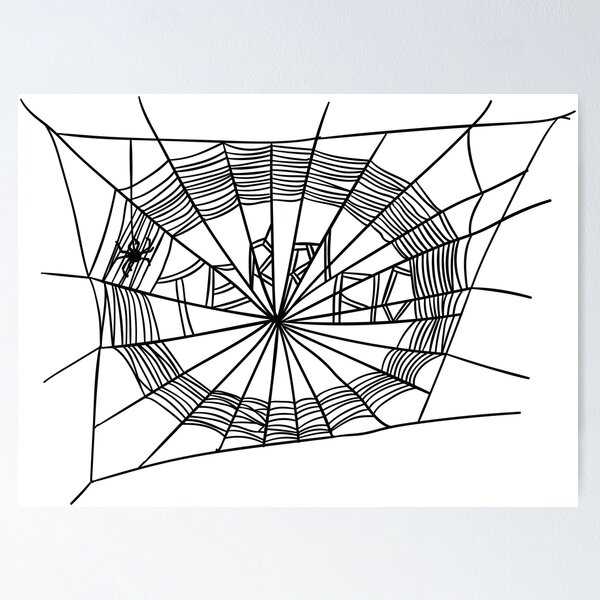
- Choose a familiar scene — perhaps when Charlotte writes in her web in Charlotte’s Web.
- Ask students to retell the moment not from Wilbur’s eyes, but from the goose’s or Templeton’s perspective.
- Encourage them to change the tone, language, and details to match the new narrator’s attitude.
Discuss afterwards:
- What changed in the retelling?
- What stayed the same?
- What did the new point of view reveal that the original didn’t?
This simple shift shows students how an author’s choice of narrator shapes everything from mood to message.
Multiple-Perspective Journaling
This strategy helps students explore empathy and bias—two powerful outcomes of teaching point of view and perspective.
How to implement:
- Select a key event from the class novel. For example, in Wonder, the moment when Julian bullies Auggie.
- Ask students to write a short journal entry for each character involved.
- Auggie’s journal might show confusion and sadness.
- Julian’s journal might reveal peer pressure or insecurity.
- Use structured prompts like:
- “What did I notice?”
- “What did I assume?”
- “What do I wish others understood?”
This exercise helps students understand that perspective shapes truth—and that stories rarely have one “right” version of events.
Compare and Contrast First-Person and Third-Person Narration
When teaching point of view and perspective, direct comparison between narration styles helps students see the craft behind author choice.
Activity idea:
- Select a short first-person passage (e.g., The One and Only Ivan) and a third-person passage (e.g., Esperanza Rising).
- Read both aloud and discuss:
- How does each narrator make you feel closer—or more distant—from the character?
- What information does the third-person narrator know that the first-person narrator doesn’t?
Extension:
Have students rewrite a few sentences of one passage in the other point of view. They’ll quickly see how the sense of intimacy, knowledge, and emotion changes.
Create a Point of View Anchor Chart
Visuals help anchor understanding for all students.
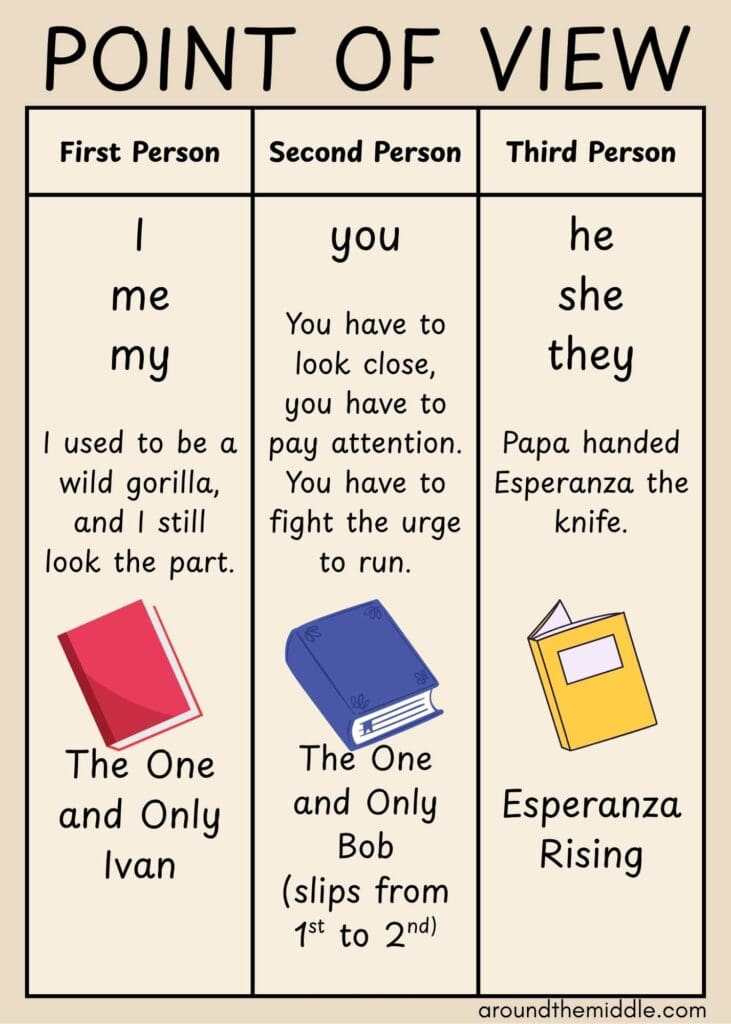
How to make it:
Draw three columns labeled First Person, Second Person, and Third Person.
Under each, list:
- Common pronouns (I, me / you / he, she, they)
- A short example sentence
- A familiar book title that uses that narration
Encourage students to add sticky notes with examples from their independent reading. Over time, the chart becomes a growing reference for understanding voice and narration.
Teaching point of view and perspective with a “What If” Retelling Challenge
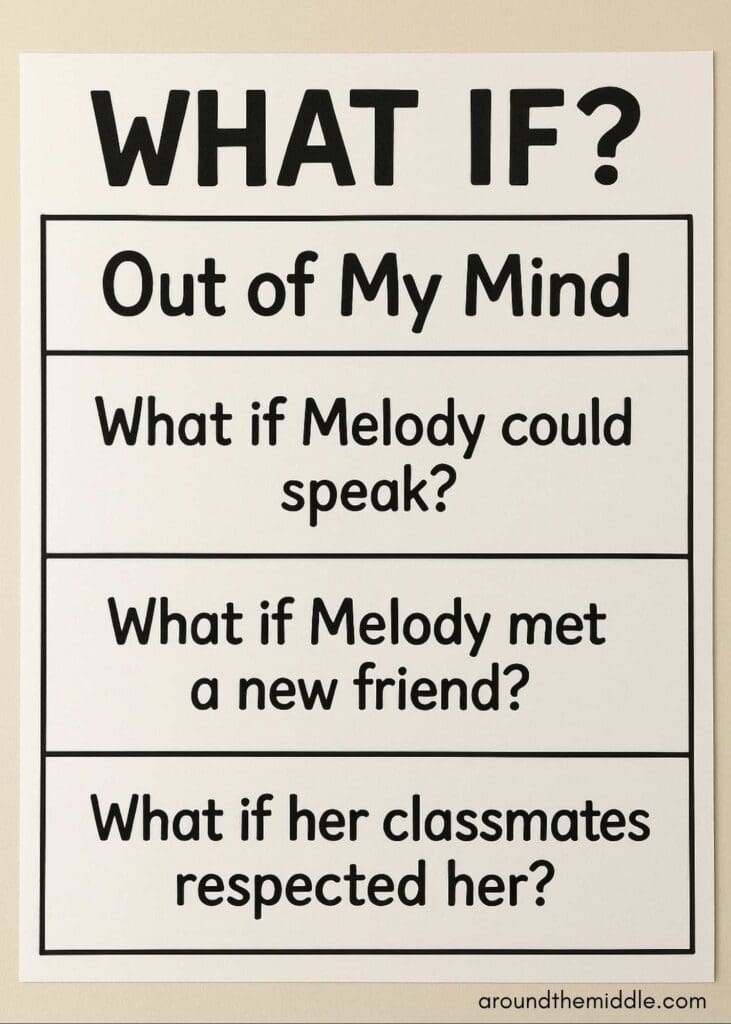
Challenge students to consider how a story would change if told by another character—or even the antagonist.
Example prompts:
- “What if The Giver were told from the Giver’s point of view instead of Jonas’s?”
- “What if Charlotte’s Web were narrated by the farmer?”
- “What if Melody met a new friend? What would their point of view on what happened with the contest be?”
Ask students to identify what new emotions, opinions, or details might emerge. This naturally leads to a discussion of author intent—why the author chose the perspective they did.
To extend this activity even further, consider pairing these “what if” retellings with structured debate prompts. My Novel Debate Statements resource provides ready-to-use, text-specific arguments that push students to justify their interpretations with evidence. After writing an alternative scene or perspective, students can select a related debate statement and defend whether their revision strengthens, weakens, or complicates the original argument. This added layer not only deepens comprehension but also builds confidence in speaking, reasoning, and supporting claims—skills that transfer seamlessly into your broader novel study work.
Novels That Work Well for Teaching Point of View and Perspective
Upper Elementary (Grades 4–6)
- Because of Winn-Dixie – First-person narration filled with emotion and bias.
- Wonder – Multiple perspectives that shift understanding and empathy.
- The One and Only Ivan – A limited narrator who reveals truth gradually.
- Fish in a Tree – Insight into internal thoughts through unreliable first-person narration.
- Esperanza Rising – Third-person narration shaped by cultural and emotional lens.
Middle School (Grades 6–8)
- Inside Out and Back Again – Personal voice in verse revealing emotion and cultural displacement.
- The Giver – Third-person limited perspective adds layers of mystery.
- Refugee – Alternating third-person perspectives build tension and connection.
- Out of My Mind – A powerful first-person voice showing internal experience.
- The Watsons Go to Birmingham—1963 – Distinctive voice and humor through first-person narration.
Author Intent and Empathy: Why Perspective Matters
Great authors choose narrators deliberately. They decide whose eyes we see through to shape how readers respond. Teaching point of view and perspective helps students notice these decisions and ask deeper questions:
- Why might the author want us to see only one side?
- What truths are hidden or revealed by this narrator?
- How might the story’s theme change if told by someone else?
By guiding students to ask these questions, you turn reading into analysis—and empathy into understanding.
Final Thoughts on teaching point of view and perspective
Teaching point of view and perspective connects reading, writing, and critical thinking. Whether through rewriting scenes, journaling as different characters, or comparing narration styles, students learn that who tells the story matters as much as what happens in it.
Don’t forget to sign-up for my newsletter to stay up to date on the latest blog posts, products and freebies!
Happy Teaching!